
BIMTECH Business Perspectives


Hareesh Thummalapally1 , Anu Grover1 and Basil Khalid1
1Department of Financial Administration, School of Management, Central University of Punjab, Bathinda, Punjab, India

This article is distributed under the terms of the Creative Commons Attribution-NonCommercial 4.0 License (https://creativecommons.org/licenses/by-nc/4.0/) which permits non-commercial use, reproduction and distribution of the work without further permission provided the original work is attributed as specified on the SAGE and Open Access page (https://us.sagepub.com/en-us/nam/open-access-at-sage).
Gauging the extent of consumers’ propensity to opt for green products over conventional products has gained significant traction. Based on the theory of planned behavior, the study has been endeavored to evaluate the influence of social media determinants on environmentally conscious purchase behavior for green products. Partial Least Squares Structural Equation Modeling was conducted to analyze the data, collected from 342 respondents. The findings indicate that green self-identity and perceived consumer effectiveness positively influence environmental attitudes (EAs), which, in turn, drive environmentally conscious purchase intentions and ultimately lead to environmentally conscious purchasing behavior. However, trust in social media was found to have an insignificant impact on EAs. The insights from the study can assist business professionals in developing targeted marketing strategies and offer valuable policy suggestions to government and regulatory agencies.
Green products, theory of planned behavior, social media, green self-identity, perceived consumer effectiveness, purchase intention, purchase behavior
Introduction
In recent decades, the rise in particulate matter, irregular weather patterns, resource depletion, and worldwide environmental challenges have heightened consumers’ awareness regarding environmental issues (Capstick et al., 2015; Lavuri et al., 2023; Mishal et al., 2017). Previously, consumers mainly focused on eco-friendly initiatives, often overlooking the environmental impact of production and consumption activities, even though these processes contributed to pollution. However, this perspective has shifted in recent years (Kim & Lee, 2023). Individuals are now more aware of the broader environmental implications and actively challenge the production of polluting goods while demanding greater accountability from governments and industries to adopt sustainable practices (Kim, 2014). As a result, environmentalism has become a critical signal, driving the growth of green sustainability and pushing businesses to adopt eco-friendly practices (Arora et al., 2023; Kautish et al., 2019). The concept of environmentally responsible behavior has emerged as a critical focus in modern marketing strategies for researchers and marketers (Jaiswal & Singh, 2018; Tsai et al., 2020). As consumers become increasingly aware of eco-sustainability, their purchasing choices reflect a growing commitment to sustainable practices. This trend has opened up new avenues for research into sustainable consumer behavior, providing a fertile ground for exploring eco-conscious behaviors in emerging markets (Kumar et al., 2017; Lavuri et al., 2023; Prakash & Pathak, 2017).
Moreover, to meet the growing demands of the 21st century, particularly in addressing the climate crisis, marketers are swiftly developing effective environmentally sustainable marketing strategies (Han & Xu, 2020). Organizations increasingly leverage social networks like Facebook, Instagram, and Twitter to promote green product lines, aligning with the push for sustainability (Arora et al., 2023; Grilli & Curtis, 2021). This strategy is particularly effective as these social media platforms heavily influence consumer attitudes and purchasing intentions toward green products. As of 2024, digital social media platforms have attracted more than five billion users worldwide, showing the growing impact of these platforms on daily life and consumer behavior (Petrosyan, 2024).
Organizations have the potential to significantly increase the market reach of sustainable products by actively promoting them on social media (Bedard & Tolmie, 2018; Zhao et al., 2019). This is particularly relevant in markets like India, where consumers are strongly inclined toward eco-friendly products (Kautish et al., 2019; Yadav & Pathak, 2017). Previous studies consistently indicate that sustainable values are crucial in driving green procurement (Kautish, 2020; Kautish & Dash, 2017; Kautish & Sharma, 2018). Additionally, understanding how social media marketing influences consumer intentions to purchase sustainable products is essential for effectively leveraging these platforms to enhance the market penetration of eco-friendly offerings. Hamid et al. (2017) and Tlebere et al. (2016) have pointed out a significant research gap regarding the media’s impact on various sustainable initiatives, indicating a lack of insights into how social media influences environmentally conscious behaviors. To conduct an effective campaign that promotes socially responsible behavior, it is crucial to understand the underlying dynamics that facilitate this process (Kaur & Chahal, 2018; Singh Kushwaha, 2015). Investigating the antecedents of environmentally conscious purchase behavior (EPB) is essential for bridging the intention-behavior gap—a crucial aspect that this study addresses.
Despite increased awareness of green products, there remains a significant gap between individuals’ intentions and their actual behavior. Characteristics of individuals displaying a “green gap” include a lack of justification and social awareness, emphasizing the importance of connecting consumers with green products to bridge this disparity. Therefore, this study aims to bridge this gap by measuring the effect of the main determinants of EPB in the domain of the social media environment. The study considers three research questions (RQs).
RQ1: Do selected determinants (green self-identity [GSI], perceived consumer effectiveness [PCE], and trust in social media [TS]) influence environmental attitudes (EAs) toward green products?
RQ2: Does EA impact environmentally conscious purchase intention?
RQ3: Does environmentally conscious purchase intention influence EPB? The study utilizes the theory of planned behavior (TPB) to understand consumers’ EPB by adding variables related to social media, that is, TS, PCE and GSI.
The present research is systematized in the respective orders: First, the theoretical background of the study is addressed. Next, the literature review and development of the proposed hypothesis are discussed. The methodology and outcome of the hypothesis were thoroughly explained in the subsequent sections. The final section of the article addresses the implications, limitations, and future research directions.
Theoretical Background and Conceptual Framework
The TPB has proven to be a pivotal model in understanding consumer behavior, particularly in relation to environmentally conscious actions. The model, originally proposed by Ajzen (1985), emphasizes the role of attitudes, subjective norms, and perceived behavioral control in shaping consumer intentions. Over the years, numerous studies have utilized TPB to explore green purchase intentions across various sectors. For example, Shalender and Sharma (2021) applied TPB to examine how EAs influence consumer adoption intentions for electric vehicles in India, extending the model to include environmental concern. Shukla (2019) also employed TPB to evaluate Indian millennials’ intent to purchase eco-friendly products, highlighting the significant influence of the model’s core predictors: attitudes, subjective norms, and perceived control on behavioral intentions. Further, in the Indian context, Yadav and Pathak (2017) demonstrated its applicability in understanding consumer behavior toward green products. These studies collectively affirm TPB’s effectiveness in capturing the key drivers of green purchase intentions across different demographic groups and sectors.
This study focuses on evaluating the purchase behavior of green products, particularly within India. The conceptual framework integrates insights from TPB while adding variables that account for social media’s influence on consumer behavior, providing a robust model to understand how EPB are shaped by GSI, TS, and PCE. By identifying the significant impact of these factors, this study offers valuable insights for marketers and policymakers aiming to promote sustainable consumption through targeted social media strategies and enhanced consumer engagement.
Literature Review and Hypothesis Development
GSI and EA
GSI extends the concept of self-identity to encompass the consumption of sustainable products, shaping behavior through alignment with personal, role, and social identities toward green practices. Self-identity operates as a guiding force influenced by both internal standards and societal norms, where intrinsic motivations play a pivotal role in individual decision-making processes (Sharma et al., 2022; Stets & Burke, 2003; Udall et al., 2021). Likewise, self-identity exerts a profound impact on environmental protection intentions, offering novel perspectives for the development of green policies and initiatives aimed at enhancing sustainability efforts (Mancha & Yoder, 2015). The interplay between green self-concept and self-identity significantly shapes intentions to purchase eco-friendly products, with self-identity serving as a crucial mediator in this relationship (Sharma et al., 2020). This positive influence of GSI encourages consumers to prioritize purchasing environmentally friendly products, establishing it as a precursor to their intention to buy green (Palomino Rivera & Barcellos-Paula, 2024)
According to Hustvedt and Dickson (2009), self-identity as a “green consumer” or “organic consumer” strongly influences attitudes and behaviors toward environmentally friendly products, highlighting its critical role in predicting and shaping consumer environmental actions. The alignment between consumers’ self-identities and their attitudes toward green products is consistently documented in previous research (Bartels & Hoogendam, 2011; Michaelidou & Hassan, 2008). Additionally, several studies have shown that GSI affects purchase intentions both directly and indirectly through various context-specific factors (Barbarossa et al., 2015; Confente et al., 2020; Whitmarsh & O’Neill, 2010). Based on the above, the following hypothesis is proposed:
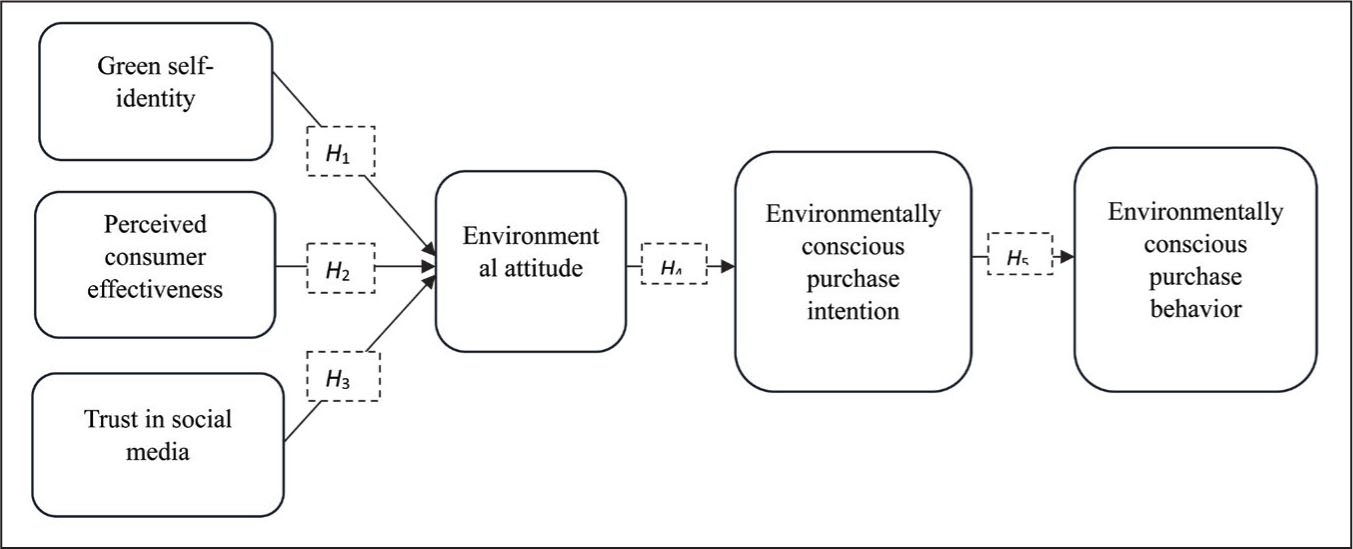
H1: GSI has a significant influence on EA toward green products.
PCE and EA
PCE reflects the individuals’ confidence in the efficacy of their actions in addressing environmental issues (Munir et al., 2023). This concept involves assessing the consumer’s ability to appreciate sustainable development outcomes and contribute to their achievement through specific behaviors (Hanss & Doran, 2020). Consumers who believe their actions substantially impact the environment are more likely to engage in and sustain environmentally friendly practices, translating their intentions into actual actions (Affecting et al., 2024).
PCE is positively correlated with EA (Heo & Muralidharan, 2019), serving as a building block for stronger and more stable attitudes toward environmentally conscious behaviors (Vermeir & Verbeke, 2006). PCE enhances consumers’ internal focus, fostering their belief in the potential efficacy of their actions in safeguarding and contributing to environmental preservation (Kumar et al., 2022). With stronger PCE beliefs, favorable EAs are more likely to lead to pro-environmental actions (Berger & Corbin, 1992). Hence, this study assumes the following hypothesis:
H2: PCE has a significant influence on EA toward green products.
TS Media and EA
Mataram (2020) described the term social media trustworthiness as representing consumers’ beliefs about the authenticity and credibility of advertising content or sources. When individuals have an intense perception of the integrity of social media platforms, they are more likely to engage in environmentally conscious content (Han & Xu, 2020). Likewise, Xie and Madni (2023) stated that social media plays a stimulating role in shaping the subjective norms and perceptions of green consumption among the younger generation. Additionally, the relationship between social media and sustainable attitudes is characterized by the potential for prolonged social media usage to positively influence users’ EAs due to exposure to eco-friendly content and community engagement (Zafar et al., 2021).
As social media contributes to increased knowledge about product development or processes, consumers are more likely to change their purchasing intentions and attitudes toward green products (Nekmahmud et al., 2022). TS media boosts consumers’ confidence in eco-friendly products, fostering sustainable purchasing behaviors by facilitating the exchange of information about environmental benefits. This shapes their EAs and leads them toward more sustainable practices (Han & Xu, 2020; Zafar et al., 2021). Considering this, the following hypothesis is proposed:
H3: TS media has a significant influence on EA toward green products.
EA and Environmentally Conscious Purchase Intention
Individuals’ EAs are an integral component of the sustainable decision-making process. It pertains to cognitive evaluations, affective responses, as well as behavioral tendencies that guide pro-environmental behavior (Kaiser et al., 2017). Gifford and Sussman (2012) noted that these attitudes are distinct from related constructs like beliefs, values, and personal norms, yet they play a crucial role in guiding behaviors for environmental sustainability. This mindset is shaped by beliefs, affect, and behavioral intentions regarding environmentally related activities (Singh & Gupta, 2013). Kotchen and Reiling (2000) opined that positive EAs are strong predictors of environmentally conscious buying habits; similarly, Kaiser et al. (2007) found that these attitudes shape intentions toward actions aligned with environmental preservation beliefs and values.
Consumers with a positive attitude toward environmental behavior are motivated to purchase green products, as supported by several studies indicating that EAs directly influence the purchase intentions of youth (Yadav & Pathak, 2017). In light of these considerations, we advance the following hypothesis:
H4: EA has a significant influence on environmentally conscious purchase intention toward green products.
Environmentally Conscious Purchase Intention and EPB
Environmentally conscious consumer behavior, characterized by consumers’ preference for environmentally benign products, plays a crucial role in addressing environmental challenges (Heo & Muralidharan, 2019). This behavior is closely linked to environmental purchase intention, which is well-documented in the literature as a predictor of actual behavior. According to Ajzen (1985), intention, influenced by attitudes and subjective norms, strongly predicts consumer behavior. This intention is further reinforced by great concern for environmental and social issues, motivating eco-friendly purchasing behavior.
Further, Lazaroiu et al. (2019) reported that environmentally conscious purchase intentions are shaped by pro-EAs, beliefs, and perceived green accountability, moderated by product value. Consumer preference for green products is bolstered by ecological knowledge, which enhances perception of product quality and company credibility, highlighting the crucial role of green purchase intention in promoting sustainability (Costa et al., 2021). Despite variations across contexts, numerous studies affirm the positive relationship between intention and behavior, especially in environmental contexts (Shabnam, 2013; Thøgersen & Ölander, 2006). These findings underscore the significant role of consumer intention and environmental consciousness in promoting environmentally sustainable behaviors. From the preceding analysis, the following hypothesis is suggested:
H5: Environmentally conscious purchase intention has a significant influence on EPB toward green products.
Research Methodology
Construct Operationalization
A closed-ended research questionnaire was designed to test the relationships proposed in the conceptual model (Figure 1). All the measures used in the study were adapted from previous literature, and some items have been revised to ensure their context aligns with the objectives of the study. To assess GSI, scales developed by Kumar et al. (2023) and Palomino Rivera and Barcellos-Paula (2024) were adapted. The PCE was measured using scales from Polisetty et al. (2024) and Sun and Wang (2020). TS media was gauged through scales adapted from Pop and Zsuzsa (2020) and Xie and Madni (2023). EA was assessed using scales from Kaur and Gupta (2022), Malik and Singhal (2017) and Uddin and Khan (2018). The scales for environmentally conscious purchase intention were adapted from Moslehpour et al. (2021), Sun and Xing (2022), and Yadav and Pathak (2017). Finally, EPB was measured using scales developed by Kumar and Pandey (2023) and Silintowe and Sukresna (2022).
Sampling Design and Data Collection
The present study adopted a purposive sampling approach, enabling selective targeting of participants with substantial knowledge and experience regarding green products, which aligns with the study’s emphasis on informed consumer behavior. This approach was selected to ensure the relevance of the data collected. The survey population comprised Indian green buyers, and data collection was conducted online via various social media platforms frequented by individuals who purchase green products. The study targeted a sample size of 342 respondents, including 187 males (54.68%) and 155 females (45.32%), consistent with Hair et al. (2014) who propose a sample size of 5 to 10 respondents per item for robust analysis.
SmartPLS software was utilized for data analysis, as it is particularly well-suited for complex models, small to medium sample sizes, and simultaneously examining multiple relationships among observed and latent variables. These capabilities make it an appropriate choice for investigating the multifaceted factors influencing consumers’ green product purchasing behavior.
Data Analysis and Results
Demographic Profile
The demographic profile analysis depicts that most respondents were male, with a number of 187 (54.68%), while females constituted 155 individuals (45.32%). The majority of the participants were between the ages of 21 and 30, indicating the young adult demographic profile. The respondents’ education qualifications include 195 graduates (57.02%), 89 postgraduates (26.02%), 37 with 10+2 (10.82%), 12 with 10th grade, 4 with elementary school, 3 with diplomas, and 2 with PhDs. Most respondents were students (54.68%), followed by private employees (21.35%), housewives (7.31%), businessmen (7.02%), professionals (5.26%), government employees (3.51%), and others (0.88%). Most respondents lived in semi-urban areas (42.98%), followed by rural areas (31.87%) and urban areas (25.14%) (see Table 1).
| Demographic Variables | Frequency | Percentage |
| Gender | ||
| Male | 187 | 54.68% |
| Female | 155 | 45.32% |
| Age | ||
| 18–20 | 66 | 19.3% |
| Education Qualification | ||
| Elementary School | 4 | 1.17% |
| Occupational Status | ||
| Student | 187 | 54.68% |
| Living Area | ||
| Rural | 109 | 31.87% |
Measurement Model
The measurement model was evaluated for reliability and validity following established guidelines (Diamantopoulos et al., 2012; Drolet & Morrison, 2001). Each indicator’s factor loading was assessed and exceeded the recommended threshold of 0.70 (Hair et al., 2019), indicating that the items effectively measure their respective constructs. However, one item, EPB1, loaded slightly below the 0.70 threshold but was retained due to its theoretical relevance and contribution to the construct (Hair et al., 2017). Three measurement items, GSI3, PCE4, and EA5, were excluded due to cross-loadings, which indicated issues with discriminant validity. Reliability and validity assessments were conducted to ensure that the measurement instruments consistently and accurately represent the underlying constructs. Furthermore, discriminant validity was evaluated using the criterion proposed by Fornell and Larcker (1981).
Reliability and Validity Analysis
Construct Reliability
Table 2 provides a construct reliability analysis, including Cronbach’s Alpha (CA), Composite Reliability (CR), and Average Variance Extracted (AVE) for the constructs studied in this research. Initially, the study computed CA values ranging from 0.834 to 0.947, all exceeding the threshold of 0.70 (Hair et al., 2017). All constructs exhibit good to excellent internal consistency, with EA showing the highest consistency. Further, the CR values were measured, which ranged from 0.735 to 0.925, all greater than the threshold value of .70 established by Fornell and Larcker (1981) (see Table 2).
| Construct | Factor | Alpha | CR | AVE |
| GSI | 0.929 | 0.944 | 0.738 | |
| GSI1 | 0.858 | |||
| GSI2 | 0.841 | |||
| GSI4 | 0.834 | |||
| GSI5 | 0.876 | |||
| GSI6 | 0.874 | |||
| GSI7 | 0.872 | |||
| PCE | 0.897 | 0.929 | 0.765 | |
| PCE1 | 0.884 | |||
| PCE2 | 0.845 | |||
| PCE3 | 0.891 | |||
| PCE5 | 0.877 | |||
| TS | 0.92 | 0.936 | 0.676 | |
| TS1 | 0.815 | |||
| TS2 | 0.811 | |||
| TS3 | 0.832 | |||
| TS4 | 0.842 | |||
| TS5 | 0.750 | |||
| TS6 | 0.846 | |||
| TS7 | 0.857 | |||
| EA | 0.947 | 0.958 | 0.79 | |
| EA1 | 0.908 | |||
| EA2 | 0.911 | |||
| EA3 | 0.901 | |||
| EA4 | 0.906 | |||
| EA6 | 0.854 | |||
| EA7 | 0.852 | |||
| EPI | 0.928 | 0.943 | 0.735 | |
| EPI1 | 0.869 | |||
| EPI2 | 0.873 | |||
| EPI3 | 0.877 | |||
| EPI4 | 0.864 | |||
| EPI5 | 0.819 | |||
| EPI6 | 0.838 | |||
| EPB | 0.834 | 0.883 | 0.603 | |
| EPB1 | 0.661 | |||
| EPB2 | 0.827 | |||
| EPB3 | 0.852 | |||
| EPB4 | 0.797 | |||
| EPB5 | 0.729 | |||
Convergent Validity
To assess the convergent validity of scale items, the study employed the AVE. Each construct’s AVE value is above the 0.50 threshold proposed by Fornell and Larcker (1981), indicating that the constructs explain more than 50% of the variance in their respective items. Thus, the constructs collectively exhibit robust convergent validity, as evidenced by their high AVE values and predominantly strong item loadings.
Discriminant Validity
Table 3 represents the discriminant validity assessment of the study constructs using the Fornell-Larcker criterion. According to Fornell and Larcker (1981), discriminant validity is confirmed when the square root of the AVE for each construct is greater than its correlations with all other constructs. The diagonal values represent the square roots of the AVE and are higher than the off-diagonal correlations in the corresponding rows and columns. Specifically, the values are as follows: GSI (0.859), PCE (0.874), TS (0.822), EA (0.889), EPI (0.857), and EPB (0.776). This indicates that each construct shares more variance with its indicators than with other constructs, thereby establishing discriminant validity.
| GSI | PCE | TS | EA | EPI | EPB | |
| GSI | 0.859 | |||||
| PCE | 0.855 | 0.874 | ||||
| TS | 0.725 | 0.76 | 0.822 | |||
| EA | 0.846 | 0.864 | 0.686 | 0.889 | ||
| EPI | 0.778 | 0.829 | 0.783 | 0.807 | 0.857 | |
| EPB | 0.716 | 0.721 | 0.724 | 0.707 | 0.758 | 0.776 |
Structural Model Analysis
The next step involved examining the structural model to validate the relationships among the constructs. The study assessed the impact of GSI, PCE, and TS media on EA, as well as the impact of attitude on purchase intention and the subsequent impact of intention on purchase behavior.
The structural model analysis reveals that GSI has a moderate positive relationship with EA (coefficient = 0.401, T-statistic = 6.602, p = 0). PCE shows a strong positive relationship with EA (coefficient = 0.522, T-statistic = 9.377, p = 0), indicating that individuals who believe their actions impact environmental conservation have stronger EAs. However, TS has a negligible relationship with EA (coefficient = -0.001, T-statistic = 0.029, p = .977). Additionally, EA strongly predicts environmentally conscious purchase intention (EPI) (coefficient = 0.807, T-statistic = 32.742, p = 0), and EPI significantly influences EPB (coefficient = 0.758, T-statistic = 26.34, p = 0), confirming the impact of intentions on actual behavior (see Table 4).
| Path | Beta Coefficient | Sample Mean (M) | Standard Deviation (STDEV) | T Statistics | p Values | Decision |
| GSI → EA | 0.401 | 0.401 | 0.061 | 6.602 | 0 | Supported |
| PCE → EA | 0.522 | 0.521 | 0.056 | 9.377 | 0 | Supported |
| TS → EA | –0.001 | 0.001 | 0.043 | 0.029 | .977 | Not supported |
| EA → EPI | 0.807 | 0.807 | 0.025 | 32.742 | 0 | Supported |
| EPI → EPB | 0.758 | 0.76 | 0.029 | 26.34 | 0 | Supported |
Discussion
The proliferation of sustainable practices has a profound effect on the perception of individuals toward green products. In recent years, there has been a significant shift in consumer attitudes and behaviors toward environmental protection (Zhuang et al., 2021). With growing concerns about the state of the natural environment, consumers are actively seeking out products that have minimal impact on the ecology. Additionally, social media serves a vital function in fostering environmental awareness and effecting positive behavioral change. This study was conducted to explore the influence of social media determinants on green products and their effect on consumers’ EPB. Our conceptual framework is based on the TPB. Previous studies show a direct correlation between GSI and the intent to purchase eco-friendly products (Kumar et al., 2023). This suggests that people who see themselves as environmentally friendly are more likely to buy green products.
The findings of the study indicate that those who strongly associate themselves with environmentally friendly behaviors are more likely to hold a positive attitude toward the environment. Similarly, the positive relationship between PCE and EA supports the idea that individuals who believe their actions can impact environmental conservation tend to have significantly stronger EAs. In addition to the findings described above, the study found that TS media exhibits an insignificant relation with EA, reflecting consumers’ skepticism toward environmental messages and questioning the promises and commitment of companies. Research indicates that the widespread use of greenwashing can erode trust in environmental communication, impeding meaningful engagement and behavioral change among social media users concerned about environmental issues (Parguel et al., 2011).
The analysis further demonstrates that EA has a strong positive relationship with EPI, validating the strong influence of EAs on the intention to make environmentally friendly purchases. Consumer attitudes have a significant impact on green purchase intentions. Positive attitudes toward green products increase the likelihood of purchase (Moslehpour et al., 2023). Additionally, Cottrell (2003) and Choi and Kim (2021) underscore the influence of environmental consciousness on purchasing intentions, demonstrating that it consistently drives the propensity to purchase eco-friendly products. The results of this study reveal that purchase intention strongly translates into actual EPB, as evidenced by the path coefficient of 0.758 between EPI and EPB.
Theoretical Implications
The present study has significant theoretical implications. This study advances the understanding of consumers’ EPB for green products by integrating social media determinants in the framework of TPB. Traditionally, the TPB accentuates the significance of attitudes, subjective norms, and perceived behavioral control in determining behavioral intentions and actual behaviors. The present study augments the theory by elucidating the impact of digital platforms, especially social media, on these core variables by incorporating GSI and PCE to better explain EPB.
Thus, this study represents a valuable addition to the exploration of environmentally conscious purchasing behavior and examination of the interrelations among peripheral social media elements to identify a new phenomenon.
Practical Implications
This research could furnish valuable insights into social media marketing and consumer behavior concerning environmentally sustainable products. These insights can assist business professionals in formulating effective marketing strategies and providing pertinent policy recommendations to governmental bodies. The findings of the study recommended that GSI and PCE were found to have a significant impact on EA, which may help marketers develop strategies aimed at fostering strong EPB. Because TS does not have a significant impact on EA, organizations are required to put their talents into perfecting the art of developing authentic and credible social media messages to win the trust of their customers. Lack of customers’ TS media can become a bottleneck in shaping positive attitudes toward green products. Furthermore, EA has a strong impact on EPI, and EPI is closely connected with the EPB; therefore, marketers must give active consideration to the variables proposed in the model while chalking out effective marketing policies.
The research indicates that marketing strategies focusing on enhancing personal impact awareness and providing credible and clear information are crucial for fostering a sustainable consumer culture. To develop effective sustainable strategies, businesses must understand the factors that motivate consumers to adopt environmentally conscious behavior. Educating customers about environmental threats can help cultivate a GSI, encouraging more sustainable consumer choices. These findings offer valuable guidance for brands and marketing practitioners in identifying effective strategies to promote green consumer behavior, optimizing marketing budgets, and developing robust relationships with consumers to support environmental sustainability initiatives.
Limitations and Future Research Directions
The study has a few constraints that limit the scope of potential research in the field of environmentally responsible consumption, which should be addressed in future studies. First, the data were collected at a single point in time, which may not capture the dynamic nature of consumer attitudes and behaviors. Longitudinal studies could offer valuable insights into how these factors evolve over time. Additionally, the study focused on specific variables like GSI, PCE, and EA, but did not consider other potentially influential factors such as cultural values, economic conditions, and political influences. Expanding the scope to include these factors could offer a more comprehensive understanding of what drives environmentally conscious behavior.
Future research should aim to include a more diverse sample in terms of age, gender, socioeconomic status, and geographic location to enhance the generalizability of the findings. Furthermore, comparing the effectiveness of different types of influencers (virtual vs. human) across various social media platforms can provide deeper insights into the most effective strategies for different demographics.
The authors declared no potential conflicts of interest with respect to the research, authorship, and/or publication of this article.
The authors received no financial support for the research, authorship, and/or publication of this article.
Hareesh Thummalapally https://orcid.org/0000-0002-3072-5630
Anu Grover https://orcid.org/0009-0009-9393-8973
Affecting F., Intention P., Green O. F., Products C., Generation Y., Ho I. N., & Minh C. H. I. (2024). Factors Affecting Purchase Intention of Green Cosmetics Products Toward, 05(01), 6830–6836.
Ajzen I. (1985). From intentions to actions: A theory of planned behavior. In Kuhl J. & Beckmann J. (Eds.), Action control: From cognition to behavior (pp. 11–39). Springer. https://doi.org/10.1007/978–3–642–69746–3_2
Arora N., Rana M., & Prashar S. (2023). How does social media impact consumers’ sustainable purchase intention? Review of Marketing Science. https://doi.org/10.1515/roms–2022–0072
Barbarossa C., Beckmann S. C., De Pelsmacker P., Moons I., & Gwozdz W. (2015). A self–identity based model of electric car adoption intention: A cross–cultural comparative study. Journal of Environmental Psychology, 42, 149–160. https://doi.org/ 10.1016/j.jenvp.2015.04.001
Bartels J., & Hoogendam K. (2011). The role of social identity and attitudes toward sustainability brands in buying behaviors for organic products. Journal of Brand Management, 18(9), 697–708. https://doi.org/10.1057/bm.2011.3
Bedard S. A. N., & Tolmie C. R. (2018). Millennials’ green consumption behaviour: Exploring the role of social media. Corporate Social Responsibility and Environmental Management, 25(6), 1388–1396. https://doi.org/10.1002/csr.1654
Berger I. E., & Corbin R. M. (1992). Perceived consumer effectiveness and faith in others as moderators of environmentally responsible behaviors. Journal of Public Policy & Marketing, 11(2), 79–89. https://doi.org/10.1177/074391569201100208
Capstick S., Whitmarsh L., Poortinga W., Pidgeon N., & Upham P. (2015). International trends in public perceptions of climate change over the past quarter century. Wiley Interdisciplinary Reviews: Climate Change, 6(1), 35–61. https://doi.org/ 10.1002/wcc.321
Choi S., & Kim I. (2021). Sustainability of nature walking trails: predicting walking tourists’ engagement in pro–environmental behaviors. Asia Pacific Journal of Tourism Research, 26(7), 748–767. https://doi.org/10.1080/10941665.2021.1908385
Confente I., Scarpi D., & Russo I. (2020). Marketing a new generation of bio–plastics products for a circular economy: The role of green self–identity, self–congruity, and perceived value. Journal of Business Research, 112, 431–439. https://doi.org/10.1016/j.jbusres.2019.10.030
Costa C. S. R., Costa M. F. da, Maciel R. G., Aguiar E. C., & Wanderley L. O. (2021). Consumer antecedents towards green product purchase intentions. Journal of Cleaner Production, 313, Article 127964. https://doi.org/10.1016/j.jclepro.2021.127964
Cottrell S. P. (2003). Influence of sociodemographics and environmental attitudes on general responsible environmental behavior among recreational boaters. Environment and Behavior, 35(3), 347–375. https://doi.org/10.1177/0013916503035003003
Diamantopoulos A., Sarstedt M., Fuchs C., Wilczynski P., & Kaiser S. (2012). Guidelines for choosing between multi–item and single–item scales for construct measurement: A predictive validity perspective. Journal of the Academy of Marketing Science, 40(3), 434–449. https://doi.org/10.1007/s11747–011–0300–3
Drolet A. L., & Morrison D. G. (2001). Do we really need multiple–item measures in service research? Journal of Service Research, 3(3), 196–204. https://doi.org/10.1177/109467050133001
Fornell C., & Larcker D. F. (1981). Evaluating structural equation models with unobservable variables and measurement error. Journal of Marketing Research, 18(1), 39–50. https://doi.org/10.2307/3151312
Gifford R., & Sussman R. (2012). Environmental attitudes. In Clayton S. D. (Ed.), The Oxford handbook of environmental and conservation psychology (pp. 65–80). Oxford University Press. https://doi.org/10.1093/oxfordhb/9780199733026.013.0004
Grilli G., & Curtis J. (2021). Encouraging pro–environmental behaviours: A review of methods and approaches. Renewable and Sustainable Energy Reviews, 135, Article 110039. https://doi.org/10.1016/j.rser.2020.110039
Hair J. F., Hult G. T. M., Ringle C. M., & Sarstedt M. (2014). A primer on partial least squares structural equation modeling (PLS–SEM). Sage.
Hair J. F., Matthews L. M., Matthews R. L., & Sarstedt M. (2017). PLS–SEM or CB–SEM: Updated guidelines on which method to use. International Journal of Multivariate Data Analysis, 1(2), 107–123. https://doi.org/10.1504/IJMDA.2017.087624
Hair J. F., Risher J. J., Sarstedt M., & Ringle C. M. (2019). When to use and how to report the results of PLS–SEM. European Business Review, 31(1), 2–24. https://doi.org/ 10.1108/EBR–11–2018–0203
Hamid S., Ijab M. T., Sulaiman H., Md. Anwar R., & Norman A. A. (2017). Social media for environmental sustainability awareness in higher education. International Journal of Sustainability in Higher Education, 18(4), 474–491. https://doi.org/10.1108/IJSHE–01–2015–0010
Han R., & Xu J. (2020). A comparative study of the role of interpersonal communication, traditional media and social media in pro–environmental behavior: A China–based study. International Journal of Environmental Research and Public Health, 17(6), Article 1883. https://doi.org/10.3390/ijerph17061883
Hanss D., & Doran R. (2020). Perceived consumer effectiveness. In Filho W. Leal, Azul A. M., Brandli L., Özuyar P. G., & Wall T. (Eds.), Responsible consumption and production (pp. 535–544). Springer. https://doi.org/10.1007/978–3–319–95726–5_28
Heo J., & Muralidharan S. (2019). What triggers young millennials to purchase eco–friendly products? The interrelationships among knowledge, perceived consumer effectiveness, and environmental concern. Journal of Marketing Communications, 25(4), 421–437. https://doi.org/10.1080/13527266.2017.1303623
Hustvedt G., & Dickson M. A. (2009). Consumer likelihood of purchasing organic cotton apparel: Influence of attitudes and self–identity. Journal of Fashion Marketing and Management, 13(1), 49–65. https://doi.org/10.1108/13612020910939879
Jaiswal D., & Singh B. (2018). Toward sustainable consumption: Investigating the determinants of green buying behaviour of Indian consumers. Business Strategy and Development, 1(1), 64–73. https://doi.org/10.1002/bsd2.12
Kaiser F. G., Oerke B., & Bogner F. X. (2007). Behavior–based environmental attitude: Development of an instrument for adolescents. Journal of Environmental Psychology, 27(3), 242–251. https://doi.org/10.1016/j.jenvp.2007.06.004
Kaur A., & Chahal H. S. (2018). Role of social media in increasing environmental issue awareness. Researchers World: Journal of Arts, Science and Commerce, 9(1), 19–26. https://doi.org/10.18843/rwjasc/v9i1/03
Kaur J., & Gupta M. (2022). Consumer buying behaviour toward green personal care products. In 2022 International Conference on Computational Modelling, Simulation and Optimization (ICCMSO) (pp. 407–411). IEEE. https://doi.org/10.1109/ICCM SO58359.2022.00084
Kautish P. (2020). Values, sustainability consciousness and intentions for SDG endorsement. Marketing Intelligence & Planning. https://doi.org/10.1108/MIP–09–2019–0490
Kautish P., & Dash G. (2017). Environmentally concerned consumer behavior: Evidence from consumers in Rajasthan. Journal of Modelling in Management, 12(4), 601–619. https://doi.org/10.1108/JM2–05–2015–0021
Kautish P., Paul J., & Sharma R. (2019). The moderating influence of environmental consciousness and recycling intentions on green purchase behavior. Journal of Cleaner Production, 228, 1425–1436. https://doi.org/10.1016/j.jclepro.2019.04.389
Kautish P., & Sharma R. (2018). Study on relationships among terminal and instrumental values, environmental consciousness and behavioral intentions for green products. Journal of Indian Business Research, 13(1), 1–29. https://doi.org/10.1108/JIBR–01–2018–0013
Kim N., & Lee K. (2023). Environmental consciousness, purchase intention and actual purchase behavior of eco–friendly products: The moderating impact of situational context. Multidisciplinary Digital Publishing Institute (MDPI).
Kim Y. (2014). Antecedents of green purchase behavior: An examination of collectivism, environmental concern, and perceived consumer effectiveness. (August).
Kotchen M. J., & Reiling S. D. (2000). Environmental attitudes, motivations, and contingent valuation of nonuse values: A case study involving endangered species. Ecological Economics, 32(1), 93–107. https://doi.org/10.1016/S0921–8009(99)00069–5
Kumar A., & Pandey M. (2023). Social media and impact of altruistic motivation, egoistic motivation, subjective norms, and eWOM toward green consumption behavior: An empirical investigation. Sustainability, 15(5), Article 4222. https://doi.org/10.3390/su15054222
Kumar B., Manrai A. K., & Manrai L. A. (2017). Purchasing behaviour for environmentally sustainable products: A conceptual framework and empirical study. Journal of Retailing and Consumer Services, 34, 1–9. https://doi.org/10.1016/j.jretconser.2016.09.004
Kumar N., Garg P., & Singh S. (2022). Pro–environmental purchase intention towards eco–friendly apparel: Augmenting the theory of planned behavior with perceived consumer effectiveness and environmental concern. Journal of Global Fashion Marketing, 13(2), 134–150. https://doi.org/10.1080/20932685.2021.2016062
Kumar R., Kumar K., Singh R., Sá J. C., Carvalho S., & Santos G. (2023). Modeling environmentally conscious purchase behavior: Examining the role of ethical obligation and green self–identity. Sustainability, 15(8), Article 6426. https://doi.org/10.3390/su15086426
Lavuri R., Jindal A., Akram U., Naik B. K. R., & Halibas A. S. (2023). Exploring the antecedents of sustainable consumers’ purchase intentions: Evidence from emerging countries. Sustainable Development, 31(1), 280–291. https://doi.org/10.1002/ sd.2389
Lazaroiu G., Andronie M., U?? C., & Hurloiu I. (2019). Trust management in organic agriculture: Sustainable consumption behavior, environmentally conscious purchase intention, and healthy food choices. Frontiers in Public Health, 7, Article 340. https://doi.org/10.3389/fpubh.2019.00340
Malik C., & Singhal N. (2017). Consumer environmental attitude and willingness to purchase environmentally friendly products: An SEM approach. Vision, 21(2), 152–161. https://doi.org/10.1177/0972262917700991
Mancha R. M., & Yoder C. Y. (2015). Cultural antecedents of green behavioral intent: An environmental theory of planned behavior. Journal of Environmental Psychology, 43, 145–154. https://doi.org/10.1016/j.jenvp.2015.06.005
Mataram U. (2020). Dan Irritating Terhadap Attitude Toward Social Media Advertising Pada Masyarakat, 9(2), 186–197.
Michaelidou N., & Hassan L. M. (2008). The role of health consciousness, food safety concern and ethical identity on attitudes and intentions towards organic food. International Journal of Consumer Studies, 32(2), 163–170. https://doi.org/10.1111/j.1470–6431.2007.00619.x
Mishal A., Dubey R., Gupta O. K., & Luo Z. (2017). Dynamics of environmental consciousness and green purchase behaviour: An empirical study. International Journal of Climate Change Strategies and Management, 9(5), 682–706. https://doi.org/10.1108/IJCCSM–11–2016–0168
Moslehpour M., Chaiyapruk P., Faez S., & Wong W. K. (2021). Generation Y’s sustainable purchasing intention of green personal care products. Sustainability, 13(23), Article 13385. https://doi.org/10.3390/su132313385
Moslehpour M., Chau K. Y., Du L., Qiu R., Lin C. Y., & Batbayar B. (2023). Predictors of green purchase intention toward eco–innovation and green products: Evidence from Taiwan. Economic Research–Ekonomska Istraživanja, 36(2), Article 2121934. https://doi.org/10.1080/1331677X.2022.2121934
Munir A., Rehmat M., & Nisar A. (2023). Impact of perceived consumer effectiveness on green buying: A moderated mediation model. Sukkur IBA Journal of Management and Business, 10(1), 121–151. https://doi.org/10.30537/sijmb.v10i1.1234
Nekmahmud M., Naz F., Ramkissoon H., & Fekete–Farkas M. (2022). Transforming consumers’ intention to purchase green products: Role of social media. Technological Forecasting and Social Change, 185, Article 122067. https://doi.org/10.1016/j.techfore.2022.122067
Palomino Rivera H. J., & Barcellos–Paula L. (2024). Personal variables in attitude toward green purchase intention of organic products. Foods, 13(2), Article 213. https://doi.org/10.3390/foods13020213
Parguel B., Benoît–Moreau F., & Larceneux F. (2011). How sustainability ratings might deter “greenwashing”: A closer look at ethical corporate communication. Journal of Business Ethics, 102(1), 15–28. https://doi.org/10.1007/s10551–011–0901–2
Petrosyan A. (2024). Number of internet and social media users worldwide as of July 2024. Statista. https://www.statista.com/statistics/617136/digital–population–worldwide/
Polisetty A., Chakraborty D., Singu H. B., & Behl A. (2024). Examining the relationship between pro–environmental consumption behaviour and hedonic and eudaimonic motivation. Journal of Environmental Management, 359, Article 121095. https://doi.org/10.1016/j.jenvman.2024.121095
Pop R., & Zsuzsa S. (2020). Social media goes green: The impact of social media on green cosmetics purchase motivation and intention. FIIB Business Review.
Prakash G., & Pathak P. (2017). Intention to buy eco–friendly packaged products among young consumers of India: A study on developing nation. Journal of Cleaner Production, 141, 385–393. https://doi.org/10.1016/j.jclepro.2016.09.116
Shabnam S. (2013). Proposed model for predicting environmental purchase behavior of consumers. European Academic Research, 1(4), 444–466.
Shalender K., & Sharma N. (2021). Using extended theory of planned behaviour (TPB) to predict adoption intention of electric vehicles in India. Environment, Development and Sustainability, 23(1), 665–681. https://doi.org/10.1007/s10668–020–00602–7
Sharma N., Lal M., Goel P., Sharma A., & Rana N. P. (2022). Being socially responsible: How green self–identity and locus of control impact green purchasing intentions? Journal of Cleaner Production, 357, Article 131895. https://doi.org/10.1016/j.jclepro.2022.131895
Sharma N., Saha R., Sreedharan V. R., & Paul J. (2020). Relating the role of green self–concepts and identity on green purchasing behaviour: An empirical analysis. Business Strategy and the Environment, 29(8), 3203–3219. https://doi.org/10.1002/bse.2567
Shukla S. (2019). A study on millennial purchase intention of green products in India: Applying extended theory of planned behavior model. Journal of Asia–Pacific Business, 20(4), 322–350. https://doi.org/10.1080/10599231.2019.1684171
Silintowe Y. B. R., & Sukresna I. M. (2022). Green self–identity as a mediating variable of green knowledge and green purchase behavior. Jurnal Organisasi dan Manajemen, 18(1), 74–87. https://doi.org/10.33830/jom.v18i1.2564.2022
Singh N., & Gupta K. (2013). Environmental attitude and ecological behaviour of Indian consumers. Social Responsibility Journal, 9(1), 4–18. https://doi.org/ 10.1108/17471111311307787
Singh Kushwaha V. (2015). Mass media in disseminating environmental awareness. International Journal of Research–GRANTHAALAYAH, 3(9SE), 1–4. https://doi.org/ 10.29121/granthaalayah.v3.i9se.2015.3185
Stets J. E., & Burke P. J. (2003). A sociological approach to self and identity. In Leary M. R. & Tangney J. P. (Eds.), Handbook of self and identity (pp. 128–152). Guilford Press.
Sun Y., & Wang S. (2020). Understanding consumers’ intentions to purchase green products in the social media marketing context. Asia Pacific Journal of Marketing and Logistics, 32(4), 860–878. https://doi.org/10.1108/APJML–03–2019–0178
Sun Y., & Xing J. (2022). The impact of social media information sharing on the green purchase intention among Generation Z. Sustainability, 14(11), Article 6879. https://doi.org/10.3390/su14116879
Thøgersen J., & Ölander F. (2006). The dynamic interaction of personal norms and environment?friendly buying behavior: A panel study1. Journal of Applied Social Psychology, 36(7), 1758–1780. https://doi.org/10.1111/j.0021–9029.2006.00080
Tlebere T., Scholtz B., & Calitz A. P. (2016). Using social media to improve environmental awareness in higher education institutions. In Springer proceedings in business and economics (pp. 101–111). Springer. https://doi.org/10.1007/978–3–319–25153–0_9
Tsai P. H., Lin G. Y., Zheng Y. L., Chen Y. C., Chen P. Z., & Su Z. C. (2020). Exploring the effect of Starbucks’ green marketing on consumers’ purchase decisions from consumers’ perspective. Journal of Retailing and Consumer Services, 56, Article 102162. https://doi.org/10.1016/j.jretconser.2020.102162
Udall A. M., de Groot J. I. M., De Jong S. B., & Shankar A. (2021). How I see me—A meta–analysis investigating the association between identities and pro–environmental behaviour. Frontiers in Psychology, 12, Article 582421. https://doi.org/10.3389/fpsyg.2021.582421
Uddin S. M. F., & Khan M. N. (2018). Young consumer’s green purchasing behavior: Opportunities for green marketing. Journal of Global Marketing, 31(4), 270–281. https://doi.org/10.1080/08911762.2017.1407982
Vermeir I., & Verbeke W. (2006). Sustainable food consumption: Exploring the consumer “attitude–behavioral intention” gap. Journal of Agricultural and Environmental Ethics, 19(2), 169–194. https://doi.org/10.1007/s10806–005–5485–3
Whitmarsh L., & O’Neill S. (2010). Green identity, green living? The role of pro–environmental self–identity in determining consistency across diverse pro–environmental behaviours. Journal of Environmental Psychology, 30(3), 305–314. https://doi.org/10.1016/j.jenvp.2010.01.003
Xie S., & Madni G. R. (2023). Impact of social media on young generation’s green consumption behavior through subjective norms and perceived green value. Sustainability, 15(4), Article 3739. https://doi.org/10.3390/su15043739
Yadav R., & Pathak G. S. (2017). Determinants of consumers’ green purchase behavior in a developing nation: Applying and extending the theory of planned behavior. Ecological Economics, 134, 114–122. https://doi.org/10.1016/j.ecolecon.2016.12.019
Zafar A. U., Shen J., Shahzad M., & Islam T. (2021). Relation of impulsive urges and sustainable purchase decisions in the personalized environment of social media. Sustainable Production and Consumption, 25, 591–603. https://doi.org/10.1016/j.spc.2020.11.020
Zhao L., Lee S. H., & Copeland L. R. (2019). Social media and Chinese consumers’ environmentally sustainable apparel purchase intentions. Asia Pacific Journal of Marketing and Logistics, 31(4), 855–874. https://doi.org/10.1108/APJML–08–2017–0183
Zhuang W., Luo X., & Riaz M. U. (2021). On the factors influencing green purchase intention: A meta–analysis approach. Frontiers in Psychology, 12, Article 644020. https://doi.org/10.3389/fpsyg.2021.644020
