
BIMTECH Business Perspectives


Ayano Jenga1 and Meenu Gupta2
1Department of Management, Madda Walabu University, Bale Robe, Oromia, Ethiopia
2Sri Aurobindo College of Commerce and Management, Ludhiana, Punjab, India

This article is distributed under the terms of the Creative Commons Attribution-NonCommercial 4.0 License (https://creativecommons.org/licenses/by-nc/4.0/) which permits non-commercial use, reproduction and distribution of the work without further permission provided the original work is attributed as specified on the SAGE and Open Access page (https://us.sagepub.com/en-us/nam/open-access-at-sage).
The purpose of the study is to investigate the potential impact of smartphone addiction on the academic achievements of foreign students. This study adopts a descriptive research approach and utilizes multiple regression analysis to examine the relationship between smartphone addiction factors and academic performance. Primary data were collected from 132 overseas students using a structured questionnaire. The study revealed that compulsive behavior, abstinence, and tolerance are key factors of smartphone addiction and significantly influence the academic performance of foreign students. However, functional impairment associated with smartphone use showed no significant impact. This study suggests that policymakers and other relevant stakeholders, including educational institutions, can develop targeted interventions and support programs to help students understand and mitigate the adverse effects of smartphone usage on their academic performance. This study contributes original insights by focusing on the impact of smartphone addiction specifically on overseas students’ academic performance, an under-explored demographic.
Addictive disorders, career development (academic), teaching diverse students
Introduction
A smartphone is an advanced mobile gadget made to address common accessibility issues. Smartphones provide a plethora of features beyond making and receiving calls and sending texts. One reason for cellphones’ meteoric rise in popularity is their ability to do both simple and complicated tasks with ease. The use of smartphones offers high-quality functionality as well as quick access to information and entertainment for a variety of users, including students. This includes mobile audio and video conversations, mobile teleconferencing, the ability to send and receive emails, and basic internet access. Social media and entertainment are additional applications. There are enormous opportunities for entertainment and meeting new people. With a smartphone, you get the best of both worlds: a mobile phone and a computer. It can access the web using web browsers linked to Wi-Fi and mobile networks. It serves dual purposes, functioning as both an educational tool and a form of entertainment through its myriad uses. Moreover, the proliferation of ubiquitous social media platforms like Facebook and Twitter has contributed to the rapid growth in smartphone ownership across various age groups (Arefin et al., 2017). The advancement of telecommunications technology has a profound impact on students’ academic performance. Raza et al. (2020) in their research have well established that excessive dependence on technology has detrimental effects on people’s education, moral values, mental and physical health and well-being, especially students. In contrast, it is also a proven fact that smartphones have simplified the lives of students, as they can study diverse topics and access educational materials through e-learning and m-learning.
Addiction was defined as “compulsive, uncontrollable dependence on a substance, habit, or practice to such a degree that cessation causes a severe emotional, mental, or physiological reaction” by Glanze et al. (1998). Addiction is portrayed in many ways. Peele (1985) defined addiction as excessive or compulsive behavior. According to Akers (1991), impatience, withdrawal, and dependence are all examples of psychological demands of a drug that are represented by addiction. Here, the addictive person’s habitual behavior explains the psychological demand.
The internet, mobile devices, and smartphones are just a few of the different kinds of technology addiction. Internet addiction symptoms, according to Young (1998), included withdrawal, impatience, loss of control, and impairments in academic, occupational, and social functioning. Brenner (1997) used the Internet-Related Addictive behavior Inventory to identify certain disruptions to everyday living, including insufficient sleep, poor time management, and missing meals. Research on addiction has recently shifted its focus from the internet to mobile phones. Addiction to smartphones differs from addiction to mobile phones. Assessing smartphone addiction requires additional criteria beyond those used for general mobile phone addiction, due to its many unique features (Kwon et al., 2013). Recent research has highlighted four main elements that constitute smartphone addiction: compulsive behaviors, withdrawal, tolerance, and functional impairment (Alageel et al., 2021). Increased smartphone usage exposes students to several repercussions, encompassing both positive and negative aspects. Due to technological advancements, smartphones have become an indispensable part of the lives of students, having a substantial impact on the behavior of students. Nowadays, in matters related to school tasks or social networking, students depend heavily on their smartphones (Raza et al., 2020). As per the findings of infographic research undertaken by HackCollege.com, 57% of students use smartphones, 60% report being addicted to them, 75% keep their smartphones next to them while sleeping, 88% of them use it to send text messages before they go to bed, 97% of smartphone users use it for social interaction, whereas 40% of them use it to lookup their school activities. Because of heavy reliance on cellphones, the development of students’ communication and social skills might suffer in the end.
Young people, especially students, are becoming more and more dependent on technology in almost all facets of their lives; as a result, smartphone addiction is increasing. Consequently, an extensive amount of research is required to determine whether this addiction can be helpful for students or detrimental to their academic accomplishments. Every year, thousands of fatalities and instances of inappropriate behavior occur because people frequently lose consciousness while using cellphones. As smartphone usage continues to grow exponentially, the adverse effects of mobile phone use are escalating with the passage of time. A plethora of research studies spanning diverse populations have been undertaken in this context, substantiating the existence of both favorable and unfavorable correlations between smartphone addiction and students’ academic achievements. Lepp et al. (2014) have identified an adverse effect of smartphone addiction on the academic achievements of university students. Despite its detrimental effects on academic achievements, smartphone addiction does have a positive impact on one’s overall life satisfaction (Raza et al., 2020; Samaha & Hawi, 2016). This divergence has persisted in the most recent literature rather than resolving with additional research. A 2025 meta-analysis of 63 studies and over 124,000 students across 28 countries revealed only a small, though statistically significant, negative association between technology-related behaviors and academic performance, suggesting that the strong negative associations presumed by past studies may be considerably weaker and less consistent across contexts than was believed (Kuş, 2025). Considering these contradictory findings, ranging from strong negative effects to no direct effect, reveals that the field has not converged on a consistent understanding of how, or even whether, smartphone dependence shapes academic outcomes.
This lack of consensus indicates a clear gap in existing literature. Much of the prior research has treated smartphone addiction as a single, undifferentiated construct, measuring overall frequency or intensity of use without paying attention to its distinct behavioral dimensions comprising compulsive behavior, functional impairment, tolerance, and abstinence, which may have different associations with academic performance. Few studies have examined these dimensions separately, and very few have examined international students, whose academic adjustment, social isolation, and reliance on smartphones for maintaining connection with family and support networks abroad may alter these relationships in ways not captured by studies conducted on domestic populations. This study addresses this research gap by disaggregating smartphone addiction into its constituent behavioral components and examining their distinct effects on the academic performance of international university students, thereby helping to reconcile the divergent findings reported in prior research.
As the effects of smartphone addiction on students’ lives are not very clear, this study made an earnest attempt to shed light on the possible impacts of smartphones on the academic performance of international students at a university.
Review of Related Literature
People grappling with “smartphone addiction” or “nomophobia” find their daily lives significantly disrupted due to excessive use of their cellphones. Some of the many negative effects of this addiction include less sleep, decreased productivity, disruptions to social life, and strained relationships. These days, there is a growing apprehension about the potential adverse impact of smartphone use, particularly smartphone dependence and its effect on academic performance. In the literature, poor academic outcomes have been associated with excessive smartphone use. Kuss et al. (2013), in their study of college students, have established that those who were more dependent on smartphones had far worse academic performance. This view is further supported by Lepp et al. (2014) in their research findings, demonstrating that high levels of smartphone use were associated with lower grades in high school students. Junco (2012), Junco and Cotten (2012), and Levine et al. (2012) are just a few of the many studies that have elucidated the adverse effects of this behavior on academic achievements. Research shows that college students are more likely to use their cellphones for leisure purposes than for academic work (Lepp et al., 2013).
Smartphone addiction has been linked to sleep problems, which can also negatively impact academic performance. Empirical studies by Lepp et al. (2014) and Demirci et al. (2015) have established an undisputed relationship between constant smartphone usage and disrupted sleep patterns. This, in turn, has been shown to negatively impact cognition and induce fatigue. Research suggests that the effect of excessive smartphone usage on academic achievements may be moderated by demographic factors like age, gender, and educational level. For example, prior research studies have demonstrated that male college students are more vulnerable to the adverse consequences of smartphone addiction on their academic achievements, as evidenced by Lee et al. (2019). Another study highlighted that high school students who were more dependent on their smartphones for social support performed worse academically, although this was not the case for college students (Lepp et al., 2014). Research suggests that students may be more engaged and productive in class if they are able to limit their use of cellphones. For instance, a Korean study indicated that high school students who participated in smartphone addiction prevention programs had better academic performance. This program’s success was attributed, in large part, to its integration of group and individual counseling as well as instruction on responsible smartphone usage (Koo, 2011). Some studies have shown that the duration of smartphone usage and the specific activities conducted on them can play an important role in determining whether they have a negative impact on students’ academic achievement. Even certain studies have highlighted that the relation between excessive smartphone usage and academic achievement may vary by subject. To illustrate, Lepp et al. (2014), in their research work targeting high school students, pointed out that excessive use of smartphones negatively impacted math grades but had no effect on their overall performance. This fact is strongly supported by another study, by establishing that college students who used their smartphones more frequently had lower grades in science courses, but not in other subjects (Kuss & Griffiths, 2011).
Moreover, to measure an individual’s degree of smartphone usage, Kwon et al. (2013) established a tool, “The Smartphone Addiction Inventory (SPAI).” Higher scores on the SPAI are indicative of greater smartphone usage. In studies of excessive usage of smartphones, SPAI found to have high reliability and validity (Kwon et al., 2013). Numerous studies have used this tool to measure smartphone usage in different samples. Blaszczynski and Nower (2002) assert that addiction is propelled by an individual’s engagement in a particular activity rather than the consumption of a substance. They argued that compulsive behavior, functional impairment, tolerance, and abstinence are distinguishing features of process addictions.
People who suffer from substance abuse disorders, such as drug addiction or alcoholism, exhibit these traits. These notions have been investigated for many years and are well established in the domain of research conducted on addiction.
Nonetheless, it is important to mention that more work is required to fully comprehend how these concepts relate to excessive smartphone use. Hence, in this study, the researchers made an earnest attempt to focus on these factors while studying the effect of smartphone addiction on students’ academic achievements. This is particularly important given that prior research has largely treated smartphone addiction as a single, undifferentiated construct and has rarely examined these dimensions among international students specifically, a gap this study aims to address by disaggregating addiction into compulsive behavior, functional impairment, abstinence, and tolerance.
Recent evidence published in 2025 and 2026 reinforces and refines these earlier conclusions. A large-scale meta-analysis of 63 studies encompassing 124,166 students across 28 countries confirmed a small but statistically significant negative association between smartphone addiction, social media use, and video game play on the one hand, and academic performance on the other, highlighting that more technology use continues to be linked with weaker cognitive engagement and poorer academic performance (Kuş, 2025). A subsequent scoping review of 44 studies on university students further reported that smartphone addiction prevalence ranged from 11% to 85% worldwide and remained strongly associated with poorer academic, mental health, and sleep outcomes, reinforcing calls for university-level digital literacy and mental health and wellness programs (Miezah et al., 2026).
Theoretical Framework and Conceptual Justification of Addiction Dimensions
This study is grounded in Griffiths’ (2005) components model of addiction, a biopsychosocial framework originally developed to explain substance addictions but was later expanded to include behavioral, or “process,” addictions such as gambling, gaming, internet use, and smartphone use. The model proposes that any behavior becomes addictive when it demonstrates six interrelated components: salience, mood modification, tolerance, withdrawal (unpleasant psychological symptoms upon discontinuation), conflict, and relapse. Because these six elements have been shown to co-occur across otherwise unrelated addictive behaviors, the model provides a theoretically coherent basis for treating smartphone dependence as a genuine behavioral addiction rather than merely a habit or a lifestyle preference.
On the basis of this general framework, Blaszczynski and Nower (2002) argued that process addictions are most reliably distinguished by four observable features: compulsive behavior, functional impairment, tolerance, and abstinence. These four features can be understood as a more parsimonious and usable restatement of Griffiths’ six components, condensed for empirical validation in behavioral addiction research: compulsive behavior reflects the salience and relapse components; functional impairment captures the conflict component; tolerance directly mirrors the tolerance component; and abstinence corresponds to the withdrawal component. Kwon et al. (2013) subsequently operationalized this four-dimensional structure specifically for smartphones in the development of the SPAI, the measurement logic on which the hypotheses of the current study are based.
The above discussion elucidates why it is believed that each dimension affects academic performance through a different mechanism rather than a single pathway. Compulsive behavior is expected to divert time and attentional resources that might otherwise be used for studying, consistent with the displacement assumption highlighted in recent studies related to digital technology (King et al., 2025). Functional impairment is expected to function through direct disruption of academic routines, such as missed classes, incomplete assignments, and disrupted sleep, echoing the physical and emotional ill-being pathways studied by Kraut et al. (1998) and Augner and Hacker (2012). Since constant smartphone use gradually consumes more study time and cognitive space without any single significant disturbance, tolerance is anticipated to perform cumulatively. On the other hand, abstinence, in contrast, is supposed to function protectively, aligned well with the components model’s withdrawal criterion; duration of voluntary disconnection aids in the restoration of attention capacity and reduces the psychological concern that would otherwise interfere with academic assignments (Kolhe & Naik, 2025; Tromholt, 2016).
Impact of Smartphone on Academic Performance
Compulsive Behavior and Academic Performance
According to the research of O’Guinn and Faber (1989), compulsive behavior is “a response to an uncontrollable drive or desire to obtain, use, or experience a feeling, substance, or activity that leads the individual to repetitively engage in behavior that will ultimately cause harm to the individual and/or others.” A fundamental characteristic of this disorder includes behaviors like compulsive eating, shopping, gambling, and drug abuse (Parylak et al., 2011). Symptoms of obsessive-compulsive disorder include extreme compulsive activity. Users are more inclined to check their phones frequently due to the convenience of incentives like social networking and communication. Frequently checking one’s phone is now recognized as addictive behavior (Oulasvirta et al., 2012). According to Bianchi and Phillips (2005), people who indulge in excessive smartphone usage experience difficulty in regulating their time spent on the phone and get easily exhausted by smartphones. Moreover, Matusik and Mickel (2011) have empirically established that perceiving one’s compulsive behavior has inevitable increases the likelihood of negative psychological effects like despair and stress. Thus, it is an established fact that prolonged smartphone use would lead to technostress, which in turn may influence performance. Therefore, it is hypothesized that compulsive behavior of students has an adverse effect on their academic performance.
H1: Smartphone compulsive behavior has a significant adverse effect on the academic achievements of the students.
Functional Impairment and Academic Performance
Several studies were carried out in different parts of the world to discover the effect of excessive usage of smartphones on academic performance or individual quality of life. There is a growing body of evidence suggesting that excessive smartphone use can have adverse and dysfunctional outcomes for its users (Al-Barashdi et al., 2015; Albursan et al., 2022; Billieux et al., 2015; Chiu, 2014; Farooq et al., 2021; Kim et al., 2019; Toda et al., 2006; Wang et al., 2015; Zeerak et al., 2024). Anxiety levels also tend to rise alongside cell phone use (Chesley, 2005). Kraut et al. (1998) & Augner and Hacker (2012) have identified two ill-beings of excessive smartphone, these are emotional and physical. Lack of sleep or low-quality sleep, as well as general fatigue, are symptoms of physical illness. People who spend the whole day using cellphones may have difficulty falling asleep and staying asleep due to their cellphone addiction (Sohn et al., 2021). About 61.6% of respondents in a large population poll in the UK reported bad sleep, and 68.7% of those who claimed to be addicted to their smartphones also reported having trouble sleeping (Sohn et al., 2021). Research suggests that students’ functional impairment due to smartphone addiction has an adverse effect on their academic achievement.
H2: Functional impairment has a significant effect on the academic achievements of the students.
Abstinence and Academic Performance
Prior research indicates that conscious and controlled adjustments in daily smartphone usage can positively impact subjective wellbeing. This includes a reduction in depressive and anxiety symptoms, diminished tendencies toward problematic use, and increased life satisfaction. Moreover, increased levels of physical activity and a reduction in smoking behavior characterize the long-term acceptance of such changes, which have been associated with cultivating a healthier living condition. According to a research study (Tromholt, 2016), abstinence from social networking sites might potentially lead to enhanced concentration on other significant pursuits, less reliance on social comparisons, information overload, and fatigue (Maier et al., 2015). Although there is evidence supporting both perspectives, research indicates that abstinence may often provide more pronounced stress-reduction benefits. For instance, in a large study involving 1,095 participants, people who refrained from Facebook for 1 week observed better well-being than the control groups (Tromholt, 2016). Moreover, it was also proved that activity on Facebook, as opposed to inactivity, might have an adverse impact on people’s mood (Sagioglou & Greitemeyer, 2014). Therefore, it is hypothesized that abstinence from smartphones for a few days may have an important influence on the learners’ academic performance.
H3: Abstinence has a significant effect on the students’ academic achievements.
Tolerance and Academic Performance
Tolerance is the unwillingness to act on one’s own desire to reduce cell phone use. This trend indicates customers’ strong aversion to the adverse effects of prolonged smartphone usage (Afzal & Shah, n.d.). Students fully comprehend the adverse effects of excessive smartphone use, but they continue to do so nevertheless. Despite being aware of the detrimental effects their smartphone addiction is having on their academic achievement and mental wellbeing, they obstinately persist in their addiction (Soyemi et al., 2015). Hence, we made our next hypothesis that tolerance has a negative influence on academic performance.
H4: Tolerance has a significant effect on the students’ academic achievements.
Contemporary Perspectives (2025–2026)
Latest research also nuances the role of abstinence discussed above. A 2025 systematic review of digital detox practices established that voluntary, periodic disconnection from digital technology provides measurable cognitive and emotional benefits, including improved attention, reduced stress, greater self-reflection, and strengthened social connectedness, extending further support to the view that deliberate abstinence can be protective (Kolhe & Naik, 2025). At the same time, a large sample study of 640 college students revealed that brief, time-specific digital detox periods were difficult for students to sustain and, on average, produced negligible difference in daily mood compared with a control group; however, students who successfully abstain themselves from the use of their phones before bed reported better next-day mood, signifies that the timing of abstinence, and not merely its occurrence, leads to maximum benefits (King et al., 2025). In the domain of tolerance and persistent use, a 2026 study of university students in Jordan found that students continued heavy usage of smartphones despite acknowledging the negative academic and psychological outcomes, reflecting a pattern of tolerance-driven behavior which is consistent with earlier literature (Al-Rajabi et al., 2026). In the backdrop of the above discussion, it is confirmed that compulsive behavior, functional impairment, abstinence, and tolerance are validated and meaningful predictors of academic performance.
Research Hypothesis
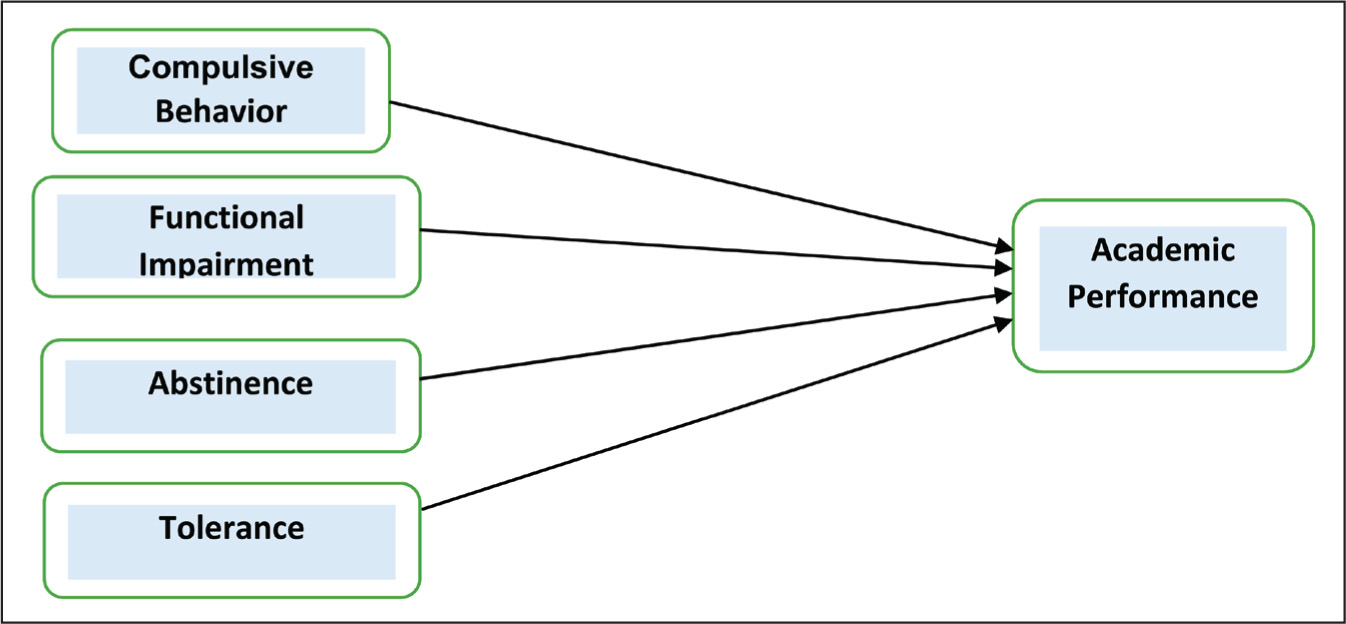
H1: Smartphone compulsive behavior has a significant effect on the students’ academic achievements
H2: Functional impairment has a significant effect on the students’ academic achievements.
H3: Abstinence has a significant effect on the students’ academic achievements.
H4: Tolerance has a significant effect on the students’ academic achievements
Conceptual Framework
The conceptual relationship between variables of excessive smartphone usage and students’ academic performance is shown as follows in Figure 1.
Materials and Methods
Study Design
Due to the impracticability of examining the whole population, a survey research methodology was used for this study. In addition, a cross-sectional design was utilized because data were gathered and examined at a single point in time. The present research adopts a quantitative approach, since data were gathered using survey questionnaires, transformed into numerical form, and then subjected to statistical analysis and evaluation (Raza et al., 2020). Moreover, correlation and regression analyses in this study examine the association between functional impairment (FI), abstinence (AB), tolerance (TL), and compulsive behavior (CB) and academic performance (AP).
Type of Data and Source
In the current research work, quantitative data are being utilized. These data types were gathered from both primary and secondary sources. To collect primary data, a questionnaire was developed and distributed to international students enrolled in various degree programs at a university in India. Moreover, journal papers, books, the internet, and magazines, among other secondary sources, were reviewed to acquire both theoretical and empirical evidence.
Population and Sampling Design
The target population comprised all international students enrolled in the university and who owned a smartphone at the time of data collection. According to records maintained by the university’s Directorate of International Students, a total of 890 foreign students were registered across various degree programs at the time of the study. To determine the minimum adequate sample size, an a priori power analysis was conducted following Cohen (1988) for multiple linear regression with four predictors, α = 0.05, and power (1-β) = 0.80. For a medium effect size (f² = 0.15), the minimum required sample was n = 85. The achieved sample of n = 132 comfortably exceeds this threshold, confirming adequate statistical power to detect medium-sized effects. As a supplementary reference, Yamane’s (1967) formula applied at an 8% margin of error yields a comparable figure, further justifying the adequacy of the sample size. A systematic random sampling technique was used. Using the official student register maintained by the Directorate of International Students as the sampling frame, a sampling interval of k = 7 (calculated as 890/132) was applied using the random starting point from within the first interval. Every 7th student on the register was selected as a target respondent. Identified students were later approached in person at classrooms, cafeterias, and hostels to fill the survey instrument, ensuring coverage across departments and residential areas. This procedure gave each student in the population a known and equal opportunity of selection.
Sample Composition and Representativeness
The achieved sample comprised 108 males (81.8%) and 24 females (18.2%), and was dominated by PhD students (56.8%), followed by Master’s students (38.6%), with only 4.5% at Bachelor’s level. Informal discussion with the university’s Directorate of International Students revealed that the majority of international students are male and involved in postgraduate research, suggesting that the sample composition broadly reflects the actual enrollment profile rather than a sampling artifact. While a formal statistical verification of sample representativeness was not done, the observed demographic profile and program-level composition are consistent with the general enrollment profile of international students at the institution, where research-level programs predominantly attract male students from abroad. The skewness of data toward male and PhD-level respondents should therefore be considered while interpreting the findings and generalizing results to female or undergraduate international students.
Methods of Data Collection
The researchers employed Self-administered survey questionnaires to collect the desired data from the target population. The questionnaire was broadly divided into two sections. Section one consists of questions for collecting demographic information of respondents, such as status, age, education and gender. Section two has 5 sub sections. Compulsive behavior (CB), functional impairment (FI), abstinence (A), tolerance(T) and Academic performance (AP). It consists of a total of 32 questions related to the topic and variables. A five-point Likert scale ranging from Strongly Disagree to Strongly Agree was applied to construct the multiple-item assessment items.
Methods of Data Analysis
After data collection, completeness and accuracy of the questionnaires were checked prior to analysis. Incomplete questionnaires were excluded at the point of collection and replaced, ensuring that all 132 questionnaires entered into analysis were fully completed with no missing values; no imputation was therefore required. Responses were pre-coded and post-coded to systematically categorize answers, and the cleaned dataset was entered into SPSS Version 23 for statistical analysis.
Both descriptive and inferential statistical techniques were employed. Descriptive statistics, including frequencies, percentages, means, and standard deviations, were computed to summarize the demographic characteristics of respondents and the distribution of scores across all study variables. Correlation analysis was subsequently conducted to examine the bivariate relationships between smartphone addiction dimensions and AP. Multiple regression analysis was then carried out to assess the simultaneous predictive effect of compulsive behavior, functional impairment, abstinence, and tolerance on academic performance.
Reliability Analysis
According to Kirk and Miller (1986), reliability is the degree to which findings consistently and reliably reflect the entire population being studied, regardless of the situation. In assessing the reliability of the research, the researchers employed Cronbach’s alpha to specify the internal consistency or average correlation, of items in a survey to determine its reliability. Alpha should ideally be between 1 and 0, with a value closer to 1 indicating more dependable results. By using SPSS Version 23 software, the reliability of 30 items has been tested, and the Alpha Coefficient was identified as 0.934 (see Table 1), which is within the threshold as per Nunnally (1967 and 1978). The alpha value of every variable in the study is above 0.7; the items used in the study are reliable. Overall, the reliability analysis of items shows the data is reliable and eligible for further analysis.
| Cronbach’s Alpha | Overall Alpha | |
| CB | 0.773 | 0.934 |
| FI | 0.757 | |
| A | 0.725 | |
| T | 0.749 | |
| AP | 0.919 |
Results and Discussions
This section presents the findings of the statistical analyses conducted on data collected from 132 international students. Results are organized sequentially, beginning with the response rate, followed by the demographic profile of respondents, descriptive statistics, correlation analysis, and multiple regression results. Of the 132 students approached and consented to participate, all returned fully completed questionnaires. It should be noted that this completion rate reflects responses among those who were approached and agreed to participate; students who were absent, unavailable, or declined to participate were not recorded. Consequently, overall non-response relative to the full population of 890 international students cannot be ascertained, and the rate should be interpreted as reflecting completion among approached participants rather than universal voluntary compliance.
Demographic Profile of Respondents
Table 2 presents the demographic characteristics of the sample. With regard to gender, the sample was predominantly male, comprising 108 male respondents (81.8%) and 24 female respondents (18.2%). In terms of age, the largest proportion of respondents fell within the 26-30 year bracket (n = 66, 50.0%), followed by the 31-35 age group (n = 33, 25.0%), the 20-25 age group (n = 21, 15.9%), the 36-40 age group (n = 9, 6.8%), and those above 40 years (n = 3, 2.3%), indicating that the sample was largely composed of young to middle-aged adults. Regarding marital status, a slight majority of respondents were married (n = 69, 52.3%), with the remaining 63 respondents (47.7%) being single. With respect to academic program, doctoral students constituted the largest group (n = 75, 56.8%), followed by Master’s students (n = 51, 38.6%), with Bachelor’s students representing only 4.5% of the sample (n = 6). This composition broadly reflects the enrollment profile of international students at the study institution, where postgraduate research programs attract a predominantly male international student body. Findings should therefore be interpreted with caution regarding their generalisability to female or undergraduate international student populations.
| Characteristics | Category | No. | %ge |
| Gender | Male | 108 | 81.8 |
| Female | 24 | 18.2 | |
| Total | 132 | 100.0 | |
| Age in years | 20–25 | 21 | 15.9 |
| 26–30 | 66 | 50.0 | |
| 31–35 | 33 | 25.0 | |
| 36–40 | 9 | 6.8 | |
| Above 40 | 3 | 2.3 | |
| Total | 132 | 100.0 | |
| Marital status | Single | 63 | 47.7 |
| Married | 69 | 52.3 | |
| Total | 132 | 100.0 | |
| Program | Bachelor | 6 | 4.5 |
| Masters | 51 | 38.6 | |
| PhD | 75 | 56.8 | |
| Total | 132 | 100.0 |
Descriptive Statistics
Table 3 presents the descriptive statistics for all study variables. Mean scores were interpreted on a five-point Likert scale, where values closer to 1 indicate strong disagreement and values closer to 5 indicate strong agreement with the items within each construct. The mean scores for compulsive behavior (M = 2.91, SD = 0.69) and functional impairment (M = 2.85, SD = 0.67) fell below the scale midpoint of 3.0, suggesting that respondents reported relatively low levels of smartphone addiction on these two dimensions. In contrast, the mean scores for abstinence (M = 3.23, SD = 0.83) and tolerance (M = 3.15, SD = 0.86) exceeded the scale midpoint, indicating that respondents acknowledged tendencies toward smartphone dependency with respect to these dimensions. Regarding the dependent variable, Academic Performance (M = 2.82, SD = 1.00) also fell below the midpoint, suggesting that respondents did not strongly agree that smartphone use had negatively affected their academic performance. These descriptive patterns provide an initial indication of the variable distributions prior to inferential analysis.
| N | Mean | Std. Devn. | |
| CB | 132 | 2.9066 | 0.68711 |
| FI | 132 | 2.8494 | 0.66803 |
| A | 132 | 3.2273 | 0.82855 |
| T | 132 | 3.1515 | 0.85740 |
| AP | 132 | 2.8220 | 0.99579 |
| Valid N (listwise) | 132 |
Correlation Analysis
Table 4 presents the Pearson correlation coefficients between the four dimensions of smartphone addiction and academic performance. All four dimensions: Compulsive Behavior (r = 0.654, p < .01), functional impairment (r = 0.490, p < .01), abstinence (r = 0.630, p < .01), and tolerance (r = 0.604, p < .01), demonstrated statistically significant positive correlations with academic performance at the 0.01 level. The strongest correlation was observed between compulsive behavior and Academic Performance (r = 0.654), followed by abstinence (r = 0.630) and tolerance (r = 0.604), with functional impairment showing the weakest though still significant association (r = 0.490). These findings indicate that all dimensions of smartphone addiction are meaningfully associated with academic performance, providing preliminary support for the hypothesized relationships prior to regression analysis.
| CB | FI | A | T | AP | ||
| AP | Pearson Correlation | 0.654** | 0.490** | 0.630** | 0.604** | 1 |
| Sig. (2-tailed) | 0.000 | 0.000 | 0.000 | 0.000 | ||
| N | 132 | 132 | 132 | 132 | 132 | |
Note: **Correlation is significant at the 0.01 level (2-tailed).
Regression Analysis
To further examine the influence of students’ smartphone addiction on their academic performance, a multiple regression model was adopted and carried out, and the following regression model was developed and used:
Y = dependent variable (poor academic performance)
β0 = constant
β1 = coefficient for independent variable (´1 = compulsive behavior)
β2 = coefficient for independent variable (´2 = functional impairment)
β3 = coefficient for independent variable (´3 = Abstinence)
β4 = coefficient for independent variable (´4 = Tolerance)
et = error term
As regression analysis involves its own assumptions, assessment of those regression assumptions is very important to verify the validity of the model. Consequently, in this study the researchers checked whether the main assumptions were fulfilled or not before conducting the analysis. Those assumptions that were examined in this study were normality, multicollinearity, and heteroscedasticity.
Normality
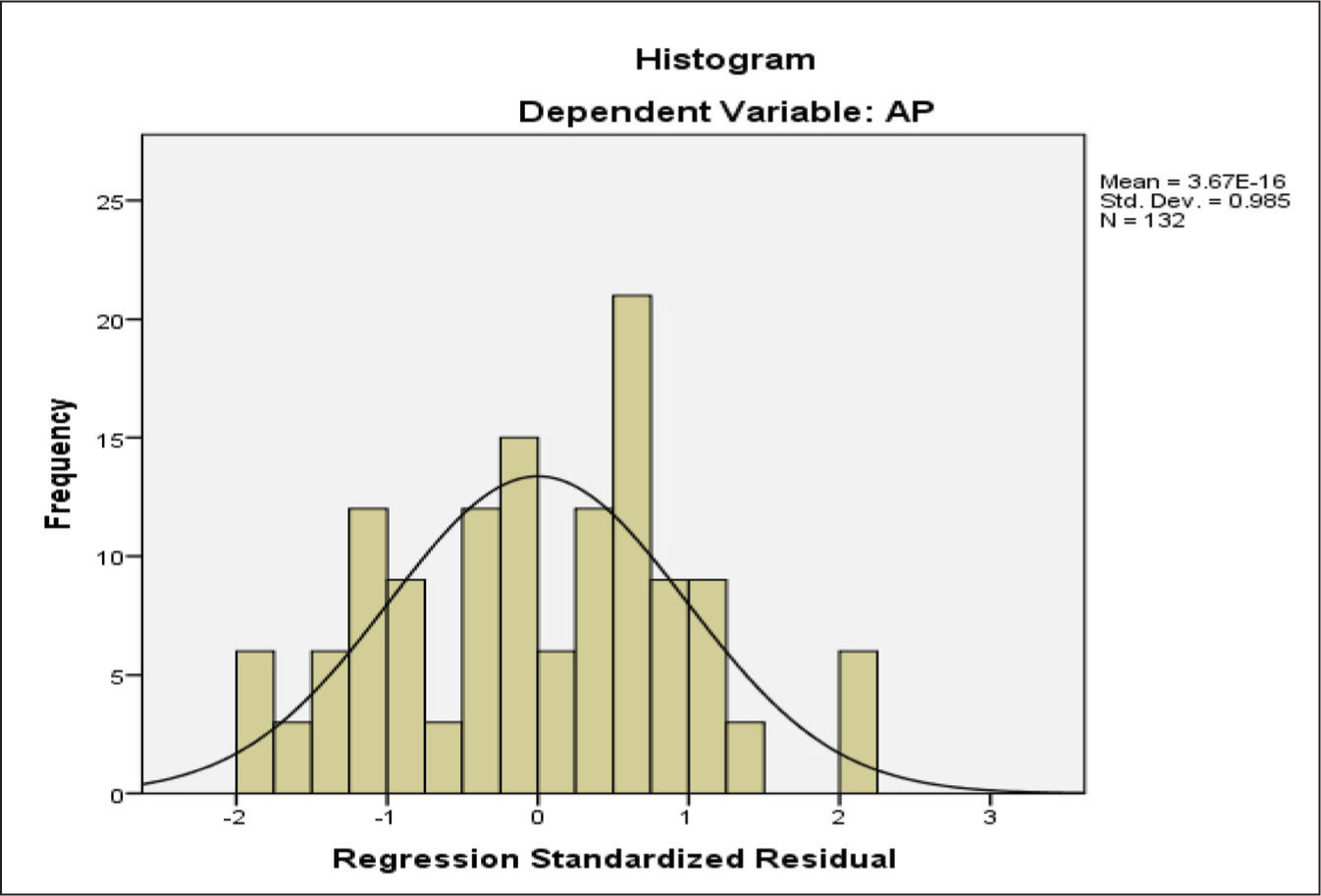
The normality of the data is tested using skewness and Kurtosis tools. A distribution that is non-normal is indicated by skewness and Kurtosis values that are greater than certain threshold levels. When it comes to significance levels, the most utilized critical values are ±2.58 at 1% and ±1.96 at 5%. The skewness and Kurtosis statistics for all items fall within the recommended range of ±1.96, indicating no substantial departure from normality (see Appendix, Table 9). As a result, it suggests that the data is normal and trustworthy for further analysis. This is further supported by the histogram of regression standardized residuals, which approximates a normal curve (see Figure 2).
Multicollinearity
The existence of a multicollinearity issue is indicated by a correlation score above 0.80, a tolerance level less than 0.10, and a variance inflation factor (VIF) over 10 in the correlation matrix (Field, 2009). According to the study’s findings, all variables have tolerance levels greater than 0.10 (ranging from 0.358 to 0.455) and VIF values less than 10 (ranging from 2.200 to 2.797), indicating that there is no collinearity between the independent variables that could affect their predictive power. As a result, all independent variables are suitable for the use of regression analysis.
Heteroscedasticity
To assess the assumption of heteroscedasticity, a scatterplot of standardized residuals against standardized predicted values was visually inspected. The residuals were randomly and evenly scattered around zero across the entire range of predicted values, with no visible funnel shape, systematic pattern, or clustering that would indicate non-constant variance.
CMB and Non-response Considerations
Since all predictor and outcome variables were collected from the same respondents at a single point in time using the same questionnaire, common method bias (CMB) was a potential concern. To remove the doubt, Harman’s single-factor test was performed by entering all items into an unrotated exploratory factor analysis in SPSS. The first unrotated factor accounted for less than 50% of the total variance as recommended by Podsakoff et al. (2003), signifying that no single factor dominated the variance and that CMB is unlikely to be a major threat to the validity of the findings. Additionally, the conceptual separation of constructs (behavioral dimensions vs. academic outcome) and the use of distinct items across constructs further minimize the risk of CMB-influenced correlations.
As shown in Table 5, the model highlights, with an adjusted R2 of 0.503, that compulsive behavior, functional impairment, abstinence, and tolerance held by students explain 50.3% of the variation in Academic performance, while 49.7% is explained by other factors not in the model.
| Model Summaryb | ||||
| Model | R | R2 | Adjusted R2 | Std. Error of the Estimate |
| 1 | 0.720a | 0.518 | 0.503 | 0.70202 |
Notes: aPredictors: (Constant), T, CB, A, FI.
bDependent variable: AP.
ANOVA is used to test the model for overall significance (Table 6). The p < .01 indicates that at least one independent variable has an influence on the dependent variable, students’ academic performance. Thus, the overall model is significant with a p value below the 1% level of significance.
| Model | Sum of Squares | df | Mean Square | F | |
| 1 | Regressionb | 67.309 | 4 | 16.827 | 34.144 |
| Residual | 62.590 | 127 | 0.493 | ||
| Total | 129.900 | 131 | |||
Notes: aDependent Variable: AP.
bPredictors: (Constant), T, CB, A, FI.
The link between the variable of interest and every predictor is revealed by beta coefficients. As depicted in Table 7, except for the functional impairment variable, the remaining variables have significant influence on students’ Academic performance. The results demonstrate that compulsive behavior has a significant effect on students’ academic performance: a one-standard-deviation increase in compulsive behavior is associated with a 0.398-standard-deviation increase in poor academic performance, holding other predictors constant (standardized β = 0.398, t = 3.888, p < .001, per Table 7). This is because compulsive behavior increases the negative effect of smartphone addiction on students’ academic performance. Similarly, abstinence (B = 0.253, p = .007, t = 2.765) and tolerance (B = 0.262, p = .012, t = 2.54) also have a significant influence on students’ academic performance, whereas functional impairment has an insignificant influence on students’ academic performance. The overall result shows that H1, H3 and H4 were supported, as their t-values were greater than 1.96 and p < 5%, whereas H2 was rejected based on the t-value. A summary of the hypothesis testing results is presented in Table 8.
| Model | Unstandardized Coefficients | Standardized Coefficients | T | Sig. | 95.0% Confidence Interval for B | |||
| B | Std. Error | Beta | Lower Bound | Upper Bound | ||||
| 1 | (Constant) | –0.278 | 0.298 | –0.931 | 0.353 | –0.868 | 0.312 | |
| CB | 0.576 | 0.148 | 0.398 | 3.888 | 0.000 | 0.283 | 0.870 | |
| FI | –0.180 | 0.153 | –0.121 | –1.178 | 0.241 | –0.483 | 0.122 | |
| A | 0.304 | 0.110 | 0.253 | 2.765 | 0.007 | 0.086 | 0.521 | |
| T | 0.304 | 0.120 | 0.262 | 2.540 | 0.012 | 0.067 | 0.541 | |
| Variable | Significance Level | Hypothesis | Result |
| Compulsive behavior (CB) | Significant | H1 | Supported |
| Functional impairment (FI) | Insignificant | H2 | Not supported |
| Abstinence (A) | Significant | H3 | Supported |
| Tolerance (T) | Significant | H4 | Supported |
Conclusion and Practical Implications
The increasing reliance on technology in many aspects of life has led to a surge in smartphone addiction among today’s youth. Numerous studies have examined the relation between students’ excessive smartphone usage and their low academic performance, and findings have shown both positive and negative associations. As a result, reliable and extensive research is required to determine whether students’ smartphone use improves or hinders their academic achievement. The overriding objective of this study is to identify the effect of smartphones on foreign students’ academic performance. The study is quantitative since numerical data have been collected and examined using various statistical methods. This study used simple random sampling techniques. The sample size of the study is 132 respondents (n = 132).
Regarding the relationship between smartphone addiction and the academic performance of the students, the effect was examined for each of the smartphone addiction factors. Regression analysis was used to examine the effect of smartphone addiction on students’ academic performance. Accordingly, compulsive behavior, abstinence and tolerance were found to have a significant effect on the academic achievement of students, whereas functional impairment had an insignificant effect on students’ academic achievement.
This study suggests that policymakers and other relevant stakeholders, including educational institutions, can develop targeted interventions such as educational workshops and counseling and support programs to help students understand and mitigate the adverse effects of smartphone usage on their academic performance. These academic institutions should consider drafting policies promoting responsible smartphone use in academic settings. Moreover, Government authorities could launch public health campaigns to educate the public about the risks of smartphone addiction, akin to anti-smoking drives.
Limitations and Scope of Future Research
This study makes a meaningful contribution to understanding the relationship between smartphone addiction dimensions and the academic performance of international students; however, several limitations should be acknowledged when interpreting its findings, and these reflect directions for future research. First, the cross-sectional design of this study, wherein data were collected at a single point in time, means that causal inferences cannot be drawn from the findings. Although regression analysis identifies the direction and magnitude of associations between compulsive behavior, functional impairment, abstinence, tolerance, and academic performance, it cannot confirm that smartphone addiction causes changes in academic performance, since both variables were measured simultaneously. Longitudinal designs, focusing on smartphone addiction and academic outcomes across an academic semester or year, would be better positioned to establish temporal precedence and causal direction. Second, all variables in this study, including the endogenous variable of academic performance, were measured through self-report questionnaire items rather than actual institutional records such as GPA transcripts or examination scores. Self-reported academic performance is prone to social desirability bias, as respondents may overestimate their academic achievement or underreport their smartphone usage; it could weaken or distort the observed associations. Future studies can fill this gap and supplement self-report measures with objective academic performance records to enhance measurement validity. Third, because all predictor and criterion variables were collected from the same respondents using the same questionnaire at a single time point, the study is vulnerable to CMB (Podsakoff et al., 2003). To partially address this concern, Harman’s single-factor test was conducted, and the first unrotated factor accounted for less than 50% of total variance, suggesting that CMB is unlikely to fully account for the observed findings. Nonetheless, future research should consider procedural remedies such as temporal separation of predictor and outcome measurement, or the common latent factor approach within a Structural Equation Modeling (SEM) framework. Fourth, this study was conducted at a single university in India, which restricts the generalisability of the findings to international student populations at other institutions, in other cities, or in other countries. International students’ smartphone use patterns and academic experiences may vary substantially depending on institutional culture, country, academic system, and available social support structures. Future studies should extend this inquiry to multiple institutions across different geographic and cultural contexts. Fifth, the sample is heavily skewed toward male respondents (81.8%) and doctoral-level students (56.8%), with female and undergraduate international students substantially underrepresented. Although this likely reflects the actual enrollment profile of the study institution, it restricts the generalisability of findings to these subgroups. Gender differences in smartphone use patterns are well established in prior research, as females tend toward social communication whereas males are more inclined toward gaming and entertainment (Lee et al., 2019). Undergraduate students face different academic pressures compared to postgraduate researchers, meaning the relationships observed here may not hold uniformly across these groups. Future studies should employ proportionate stratified sampling techniques using gender and program to ensure broader demographic representativeness.
Finally, while multiple regression analysis was adequate for testing the directional hypotheses of this study, it does not account for potential indirect associations among variables. Future research should consider applying SEM, which would allow for the simultaneous testing of direct and indirect effects, better control of measurement error, and the inclusion of mediating variables such as psychological wellbeing, self-efficacy, and social support that may explain how smartphone addiction dimensions impact academic outcomes. Further expanding the study to include domestic Indian students alongside international students would also allow for meaningful cross-group comparisons.
The authors declared no potential conflicts of interest with respect to the research, authorship, and/or publication of this article.
The authors received no financial support for the research, authorship, and/or publication of this article.
Appendix
| Descriptive Statistics | ||||||
| N | Std. Deviation | Skewness | Kurtosis | |||
| Statistic | Statistic | Statistic | Std. Error | Statistic | Std. Error | |
| I feel very energetic when I use my smartphone, regardless of my level of tiredness | 132 | 1.096 | –0.017 | 0.211 | –1.052 | 0.419 |
| I use smartphone for longer and spend more money on it than I intend to | 132 | 1.076 | –0.034 | 0.211 | –0.793 | 0.419 |
| Although using my smartphone has had negative effects on my interpersonal relationships, the amount of time I spend on the internet remains unreduced | 132 | 1.178 | –0.446 | 0.211 | –0.817 | 0.419 |
| I feel distressed or down once I stop using my smartphone for a certain period. | 132 | 1.140 | 0.178 | 0.211 | –1.042 | 0.419 |
| I cannot control the impulse to use my smartphone | 132 | 1.087 | 0.074 | 0.211 | –0.757 | 0.419 |
| My recreational activities are reduced because of my smartphone use. | 132 | 1.191 | –0.076 | 0.211 | –0.920 | 0.419 |
| My life would be joyless if I did not have a smartphone | 132 | 1.308 | 0.333 | 0.211 | –1.143 | 0.419 |
| Using my smartphone has placed me in dangerous situations: for example, I have used it while crossing the road or while driving | 132 | 1.250 | 0.799 | 0.211 | –0.458 | 0.419 |
| I try to spend less time on my smartphone, but my efforts are in unsuccessful | 132 | 1.031 | –0.104 | 0.211 | –0.830 | 0.419 |
| I have slept less than 4 hours more than once because of my smartphone use | 132 | 1.293 | 0.549 | 0.211 | –0.893 | 0.419 |
| I find myself using my smartphone at the cost of socializing with my friends | 132 | 1.003 | –0.187 | 0.211 | –0.614 | 0.419 |
| I get aches and soreness in my back or eye discomfort caused by excessive smartphone use. | 132 | 1.160 | 0.044 | 0.211 | –1.053 | 0.419 |
| My smartphone use has had certain negative effects on my schoolwork or job performance | 132 | 1.120 | –0.261 | 0.211 | –0.860 | 0.419 |
| My interaction with family members is decreased because of my smartphone use | 132 | 1.111 | –0.290 | 0.211 | –0.993 | 0.419 |
| My smartphone use is a habit and as a result my sleep quality | 132 | 1.035 | 0.264 | 0.211 | –0.792 | 0.419 |
| I need to spend an increasing amount of time on my smartphone to achieve the same satisfaction as before | 132 | .921 | 0.089 | 0.211 | –0.808 | 0.419 |
| I feel tired during the daytime due to late-night use of my smartphone | 132 | 1.104 | 0.275 | 0.211 | –0.602 | 0.419 |
| I feel uneasy once I stop using my smartphone for a certain period. | 132 | 1.207 | –0.061 | 0.211 | –1.183 | 0.419 |
| The first thing I think about when I wake up each morning is using my smartphone | 132 | 1.174 | –0.572 | 0.211 | –0.605 | 0.419 |
| I feel like I am missing something when I stop using my smartphone for a certain period | 132 | .992 | –0.222 | 0.211 | –1.046 | 0.419 |
| I feel the urge to use my smartphone again immediately after I stop using it. | 132 | 1.090 | 0.109 | 0.211 | –1.147 | 0.419 |
| I have been told more than once that I spend too much time using my smartphone | 132 | 1.025 | –0.338 | 0.211 | –0.383 | 0.419 |
| I find that I am hooked on my smartphone increasingly longer periods | 132 | 1.017 | –0.289 | 0.211 | –0.687 | 0.419 |
| Over the past three months I have substantially increased the amount of time I spend using my smartphone | 132 | 1.108 | –0.023 | 0.211 | –0.736 | 0.419 |
| Using a smartphone makes me not to study more efficiently | 132 | 1.255 | 0.060 | 0.211 | –1.134 | 0.419 |
| Using a smartphone deteriorate my performance in studying and understanding | 132 | 1.120 | 0.062 | 0.211 | –1.175 | 0.419 |
| Using a smartphone decreases my course work productivity. | 132 | 1.135 | 0.316 | 0.211 | –0.851 | 0.419 |
| Using a smartphone decreases my research knowledge and skills. | 132 | 1.190 | 0.193 | 0.211 | –1.132 | 0.419 |
| Using a smartphone reduces my study effectiveness. | 132 | 1.120 | 0.136 | 0.211 | –1.126 | 0.419 |
| Overall, I find a smartphone not useful in my studies and contribute negatively to my academic performance | 132 | 1.254 | 0.251 | 0.211 | –1.046 | 0.419 |
| Valid N (listwise) | 132 | |||||
Meenu Gupta https://orcid.org/0009-0002-9755-8467
Akers R. L. (1991). Addiction: The troublesome concept. Journal of Drug Issues, 21(4), 777–793. https://doi.org/10.1177/002204269102100407
Alageel A. A., Alyahya R. A., Bahatheq Y. A., Alzunaydi N. A., Alghamdi R. A., Alrahili N. M., McIntyre R. S., & Iacobucci M. (2021). Smartphone addiction and associated factors among postgraduate students in an Arabic sample: A cross–sectional study. BMC Psychiatry, 21(1), Article 302. https://doi.org/10.1186/s12888–021–03285–0
Al–Barashdi H. S., Bouazza A., & Jabur N. H. (2015). Smartphone addiction among university undergraduates: A literature review. Journal of Scientific Research and Reports, 4(3), 210–225. https://doi.org/10.9734/JSRR/2015/12245
Albursan I. S., Mohammad M. F., Al–Barashdi H. S., Bakhiet S. F., Darandari E., Al–Asqah S. S., Hammad H. I., Al–Khadher M. M., Qara S., Al–Mutairy S. H., & Albursan H. I. (2022). Smartphone addiction among university students in light of the COVID–19 pandemic: Prevalence, relationship to academic procrastination, quality of life, gender and educational stage. International Journal of Environmental Research and Public Health, 19(16), Article 10439. https://doi.org/10.3390/ijerph 191610439
Al–Rajabi N., Masadeh R., ALBashtawy M., Mahmoud K. F., Allari R. S., Othman E. H., & Jarrah S. S. (2026). Determinants of smartphone addiction among university students in Jordan. BMC Psychology, 14(1), Article 28. https://doi.org/10.1186/s40359–025–03603–1
Arefin M. S., Islam M. R., Mustafi M. A. A., Afrin S., & Islam N. (2017). Impact of smartphone addiction on academic performance of business students: A case study. Independent Journal of Management & Production, 8(3), 955–975. https://doi.org/10.14807/ijmp.v8i3.629
Augner C., & Hacker G. W. (2012). Associations between problematic mobile phone use and psychological parameters in young adults. International Journal of Public Health, 57(2), 437–441. https://doi.org/10.1007/s00038–011–0234–z
Bianchi A., & Phillips J. G. (2005). Psychological predictors of problem mobile phone use. CyberPsychology & Behavior, 8(1), 39–51. https://doi.org/10.1089/cpb.2005.8.39
Billieux J., Maurage P., Lopez–Fernandez O., Kuss D. J., & Griffiths M. D. (2015). Can disordered mobile phone use be considered a behavioral addiction? An update on current evidence and a comprehensive model for future research. Current Addiction Reports, 2(2), 156–162. https://doi.org/10.1007/s40429–015–0054–y
Blaszczynski A., & Nower L. (2002). A pathways model of problem and pathological gambling. Addiction, 97(5), 487–499.
Brenner V. (1997). Psychology of computer use: XLVII. Parameters of Internet use, abuse and addiction: The first 90 days of the Internet Usage Survey. Psychological Reports, 80(3), 879–882. https://doi.org/10.2466/pr0.1997.80.3.879
Chesley N. (2005). Blurring boundaries? Linking technology use, spillover, individual distress, and family satisfaction. Journal of Marriage and Family, 67(5), 1237–1248. https://doi.org/10.1111/j.1741–3737.2005.00213.x
Chiu S.–I. (2014). The relationship between life stress and smartphone addiction on Taiwanese university student: A mediation model of learning self–efficacy and social self–efficacy. Computers in Human Behavior, 34, 49–57. https://doi.org/10.1016/j.chb.2014.01.024
Cohen J. (1988). Statistical power analysis for the behavioral sciences (2nd ed.). Lawrence Erlbaum Associates.
Demirci K., Akgönül M., & Akpinar A. (2015). Relationship of smartphone use severity with sleep quality, depression, and anxiety in university students. Journal of Behavioral Addictions, 4(2), 85–92. https://doi.org/10.1556/2006.4.2015.010
Farooq O., Shah S. A. M., & Hafeez S. (2021). Smartphone addiction factors effecting university student performance. NUML International Journal of Business & Management, 16(2), 1–13. https://doi.org/10.52015/nijbm.v16i2.70
Field A. (2009). Discovering statistics using SPSS (3rd ed.). Sage Publications.
Glanze W. D., Anderson K., & Anderson L. E. (Eds.). (1998). Mosby’s medical, nursing, and allied health dictionary (5th ed.). Mosby.
Griffiths M. D. (2005). A “components” model of addiction within a biopsychosocial framework. Journal of Substance Use, 10(4), 191–197. https://doi.org/10.1080/1465 9890500114359
Junco R. (2012). In–class multitasking and academic performance. Computers in Human Behavior, 28(6), 2236–2243.
Junco R., & Cotten S. R. (2012). No A 4 U: The relationship between multitasking and academic performance. Computers & Education, 59(2), 505–514.
Kim S. G., Park J., Kim H. T., Pan Z., Lee Y., & McIntyre R. S. (2019). The relationship between smartphone addiction and symptoms of depression, anxiety, and attention–deficit/hyperactivity in South Korean adolescents. Annals of General Psychiatry, 18, Article 1. https://doi.org/10.1186/s12991–019–0224–8
King D., Moon K., & Kushlev K. (2025). Time–specific digital detox interventions: Effects and effectiveness among college students. Technology, Mind, and Behavior, 6(3). https://doi.org/10.1037/tmb0000173
Kirk J., & Miller M. L. (1986). Reliability and validity in qualitative research. Sage.
Kolhe D., & Naik A. R. (2025). Digital detox as a means to enhance eudaimonic well–being. Frontiers in Human Dynamics, 7, Article 1572587. https://doi.org/10.3389/fhumd.2025.1572587
Koo H.–Y. (2011). Development and effects of a prevention program for cell phone addiction in middle school students. Journal of Korean Academy of Child Health Nursing, 17(2), 91–99. https://doi.org/10.4094/jkachn.2011.17.2.91
Kraut R., Patterson M., Lundmark V., Kiesler S., Mukopadhyay T., & Scherlis W. (1998). Internet paradox: A social technology that reduces social involvement and psychological well–being? American Psychologist, 53(9), 1017–1031. https://doi.org/10.1037/0003–066X.53.9.1017
Ku? M. (2025). A meta–analysis of the impact of technology related factors on students’ academic performance. Frontiers in Psychology, 16, Article 1524645. https://doi.org/ 10.3389/fpsyg.2025.1524645
Kuss D. J., & Griffiths M. D. (2011). Online social networking and addiction—A review of the psychological literature. International Journal of Environmental Research and Public Health, 8(9), 3528–3552. https://doi.org/10.3390/ijerph8093528
Kuss D. J., Griffiths M. D., & Binder J. F. (2013). Internet addiction in students: Prevalence and risk factors. Computers in Human Behavior, 29(3), 959–966.
Kwon M., Lee J.–Y., Won W.–Y., Park J.–W., Min J.–A. (2013). Development and validation of a smartphone addiction scale (SAS). PLOS ONE, 8(2), Article e56936. https://doi.org/10.1371/journal.pone.0056936
Lee Y. K., Chang C. T., Lin Y., & Cheng Z. H. (2019). The dark side of smartphone usage: Psychological traits, compulsive behavior and technostress. Computers in Human Behavior, 31, 373–383. https://doi.org/10.1016/j.chb.2013.10.047
Lepp A., Barkley J. E., & Karpinski A. C. (2014). The relationship between cell phone use, academic performance, anxiety, and satisfaction with life in college students. Computers in Human Behavior, 31, 343–350.
Lepp A., Barkley J. E., Sanders G. J., Rebold M., & Gates P. (2013). The relationship between cell phone use, physical and sedentary activity, and cardiorespiratory fitness in a sample of U.S. college students. International Journal of Behavioral Nutrition and Physical Activity, 10, Article 79.
Levine L. E., Waite B. M., & Bowman L. L. (2012). Mobile media use, multitasking and distractibility. International Journal of Cyber Behavior, Psychology and Learning, 2(3), 15–29.
Maier C., Laumer S., Eckhardt A., & Weitzel T. (2015). Giving too much social support: Social overload on social networking sites. European Journal of Information Systems, 24(5), 447–464. https://doi.org/10.1057/ejis.2014.3
Matusik S. F., & Mickel A. E. (2011). Embracing or embattled by converged mobile devices? Users’ experiences with a contemporary connectivity technology. Human Relations, 64(8), 1001–1030. https://doi.org/10.1177/0018726711405552
Miezah D., Brew T., Graham M. A., & Obeng P. (2026). Smartphone addiction among university students: A scoping review of prevalence, correlates and impact. Human Behavior and Emerging Technologies, 2026, Article 5511423. https://doi.org/10.1155/hbe2/5511423
Nunnally J. C. (1967). Psychometric theory. McGraw–Hill.
O’Guinn T. C., & Faber R. J. (1989). Compulsive buying: A phenomenological exploration. Journal of Consumer Research, 16(2), 147–157. https://doi.org/10.1086/209204
Oulasvirta A., Rattenbury T., Ma L., & Raita E. (2012). Habits make smartphone use more pervasive. Personal and Ubiquitous Computing, 16(1), 105–114. https://doi.org/10.1007/s00779–011–0412–2
Parylak S. L., Koob G. F., & Zorrilla E. P. (2011). The dark side of food addiction. Physiology & Behavior, 104(1), 149–156. https://doi.org/10.1016/j.physbeh.2011.04.063
Peele S. (1985). The meaning of addiction: Compulsive experience and its interpretation. Lexington Books.
Podsakoff P. M., MacKenzie S. B., Lee J. Y., & Podsakoff N. P. (2003). Common method biases in behavioral research: A critical review of the literature and recommended remedies. Journal of Applied Psychology, 88(5), 879–903. https://doi.org/10.1037/0021–9010.88.5.879
Raza S. A., Qazi W., Umer B., & Khan K. A. (2020). Influence of social networking sites on life satisfaction among university students: A mediating role of social benefit and social overload. Health Education, 120(2), 141–164.
Sagioglou C., & Greitemeyer T. (2014). Facebook’s emotional consequences: Why Facebook causes a decrease in mood and why people still use it. Computers in Human Behavior, 35, 359–363. https://doi.org/10.1016/j.chb.2014.03.003
Samaha M., & Hawi N. S. (2016). Relationships among smartphone addiction, stress, academic performance, and satisfaction with life. Computers in Human Behavior, 57, 321–325. https://doi.org/10.1016/j.chb.2015.12.045
Sohn S. Y., Krasnoff L., Rees P., Kalk N. J., & Carter B. (2021). The association between smartphone addiction and sleep: A UK cross–sectional study of young adults. Frontiers in Psychiatry, 12, Article 629407. https://doi.org/10.3389/fpsyt.2021.629407
Soyemi J., Oloruntoba S. A., & Okafor B. (2015). Analysis of mobile phone impact on student academic performance in tertiary institution. International Journal of Emerging Technology and Advanced Engineering, 5(1), 361–365.
Toda M., Monden K., Kubo K., & Morimoto K. (2006). Mobile phone dependence and health–related lifestyle of university students. Social Behavior and Personality, 34(10), 1277–1284. https://doi.org/10.2224/sbp.2006.34.10.1277
Tromholt M. (2016). The Facebook experiment: Quitting Facebook leads to higher levels of well–being. Cyberpsychology, Behavior, and Social Networking, 19(11), 661–666. https://doi.org/10.1089/cyber.2016.0259
Wang Y., Niiya M., Mark G., Reich S. M., & Warschauer M. (2015). Coming of age (digitally): An ecological view of social media use among college students. In Proceedings of the 18th ACM Conference on Computer Supported Cooperative Work & Social Computing (pp. 571–582). Association for Computing Machinery.
Yamane T. (1967). Statistics: An introductory analysis (2nd ed.). Harper & Row.
Young K. S. (1998). Internet addiction: The emergence of a new clinical disorder. CyberPsychology & Behavior, 1(3), 237–244. https://doi.org/10.1089/cpb.1998.1.237
Zeerak Q., Imran M., Azeez K., Lokanathan T. H., & Ismail I. M. (2024). The effects of smartphone addiction on academic performance among undergraduate medical students in Karnataka, India: A multi–centric study. Cureus, 16(6), Article e62796. https://doi.org/10.7759/cureus.62796
